REVIEW · BORDEAUX
Bordeaux Cruise Wine and Canelé Discovery
Book on Viator →Operated by Croisieres Burdigala · Bookable on Viator
A wine sip and a sweet bite while the city slides by. This 1h30 river cruise is a smart way to get Bordeaux orientation fast, with a guide talking you through the riverfront landmarks. You’ll also get a free glass of local wine and a Bordeaux canelé, turning sightseeing into an easy tasting mission.
I like that the route covers both classic old-town Bordeaux and the working river in one smooth loop. You see bridges, gates, squares, and port activity from the Garonne, which is a different angle than you get on foot. It also helps you understand why locals talk about Burdigala like it’s still alive.
One thing to consider: the language experience may vary. Some guides clearly work in both languages, while other onboard commentary can lean heavily French, with limited English support materials.
In This Review
- Key points before you go
- A 90-minute Bordeaux cruise that works even if you’re short on time
- Meeting at Quai Richelieu: where the cruise starts and what to expect onboard
- Pont de Pierre: the 17-arch bridge that defines the river view
- Porte Cailhau (1495): stepping into medieval Bordeaux without walking uphill
- Place de la Bourse and the Miroir d’eau: the photo stop that’s actually worth it
- Place des Quinconces and the river promenade: space, people, and city atmosphere
- Jacques Chaban-Delmas Bridge and Pont d’Aquitaine: engineering sightseeing from the moving deck
- The Port de La Lune, Port de Bassens, and the working river reality
- La Cité du Vin: a modern wine landmark that fits the tasting moment
- Price and value: why $21.97 can actually make sense here
- Wine and canelé: a small tasting that connects to the sights
- The guide and language factor: how to get the most from the narration
- Weather, timing, and how to plan the rest of your day
- Should you book this Bordeaux Cruise Wine and Canelé Discovery?
- FAQ
- What’s included in the Bordeaux cruise?
- How long is the cruise?
- Where do I meet the tour?
- Does the tour end at the same place?
- Is the cruise suitable for most travelers?
- Is there an age rule for the included wine?
- What happens if the weather is bad?
- Cancellation: can I get my money back?
Key points before you go
- 1h30 cruise that packs major Bordeaux sights into a short, low-effort outing
- Wine + canelé included so you get flavor-focused context, not just photos
- Landmarks from multiple eras: medieval gates, 18th-century squares, and modern bridges
- Big-city views from the water including the Miroir d’eau and the port area
- Language support can be uneven, so plan for French-first commentary if that’s your concern
- Good weather matters since the cruise runs on the Garonne outdoors
A 90-minute Bordeaux cruise that works even if you’re short on time
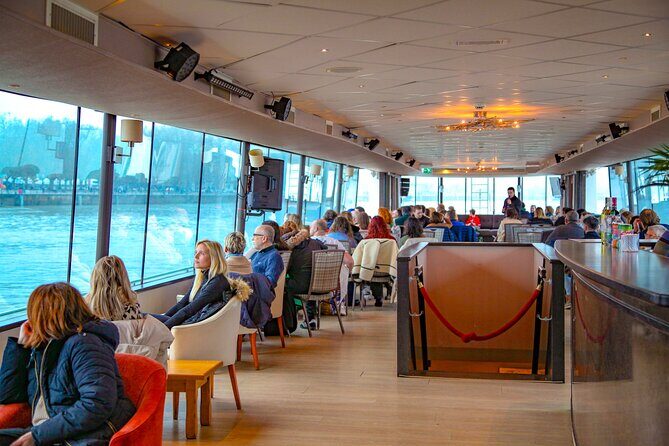
This is the kind of outing that fits right into a busy day. The cruise is only about 1 hour 30 minutes, but the route is built to show you the big visual anchors of Bordeaux along the river. You’re not trying to “finish” the city in one go. You’re getting the main geography and key scenes so your next strolls make more sense.
The included wine and canelé are not just a perk. They turn the cruise into a small tasting lesson about local tastes while you’re seeing the city that shaped them. Even if you’re not a serious wine person, it’s a friendly intro to Bordeaux’s flavor culture.
The practical upside is that you start near the central river zone at the Pontoon of honor on Quai Richelieu, and you’re back there at the end. That makes it easy to pair with dinner plans without a complicated commute.
Other Bordeaux food tours in Bordeaux
Meeting at Quai Richelieu: where the cruise starts and what to expect onboard
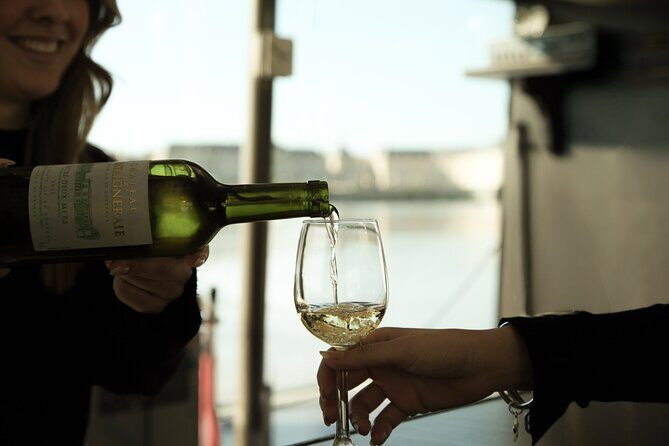
You’ll meet at the Pontoon of honor, Quai Richelieu (33000 Bordeaux). This is a central, river-facing part of town, so you’re not guessing your way across the city. The tour uses a mobile ticket, and it’s close to public transportation, which is useful in Bordeaux where you’ll likely walk anyway.
The group size caps at 200 travelers, so it can feel like a public experience more than an intimate conversation. That isn’t a problem, but it does mean your best “getting value” move is listening for what the guide highlights at each stop rather than expecting deep back-and-forth.
Also note the tour uses a real-world river setting. If weather is poor, the cruise may be canceled and you’ll get a different date or a full refund.
Pont de Pierre: the 17-arch bridge that defines the river view
The cruise’s first major landmark is the Pont de Pierre. This bridge has 17 arches and has connected Bordeaux’s banks since 1822. From the water, you immediately understand its job: it’s not just a crossing, it’s a visual anchor for the city’s layout along the Garonne.
The bridge also sets the tone for the whole trip. Bordeaux’s beauty here is about alignment: buildings, water, and stone structures that look good from moving viewpoints. Even if you’re not a “bridge person,” you’ll see why Bordeaux built its life around the river.
A mild drawback: because this is a cruising viewpoint rather than a long stop on land, you’ll want your phone ready before the announcement hits. The best photos tend to happen in that quick window while the boat positions itself.
Porte Cailhau (1495): stepping into medieval Bordeaux without walking uphill
Next comes la Porte Cailhau, built in 1495. It’s described as a fortified gate, mixing Gothic and Renaissance design, and it offers a strong river-facing view. From the deck, it’s an easy way to grasp how Bordeaux defended itself while still living beside the water.
Think of it as a time jump. Pont de Pierre tells you about the 1800s and modern connection. Porte Cailhau takes you back to the era when gates mattered for control and movement.
If you’re an architecture spotter, you’ll enjoy the contrast: the gate’s historic form against the modern rhythm of the river. If you’re not, the takeaway is simpler—this is Bordeaux’s past showing up right on the waterfront.
Place de la Bourse and the Miroir d’eau: the photo stop that’s actually worth it
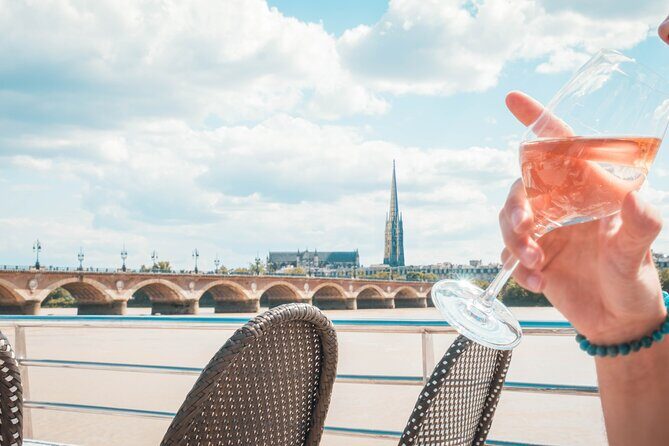
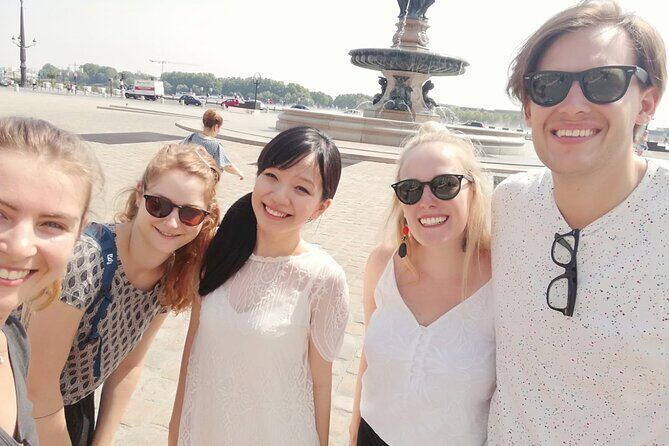
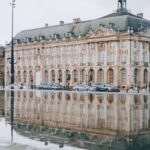
Then you reach Place de la Bourse, an 18th-century masterpiece that opens onto the Garonne. It’s the kind of space where the buildings feel planned and balanced, and it looks extra dramatic when the light changes.
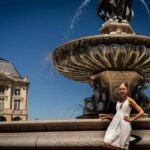
The big moment is the Miroir d’eau de Bordeaux, described as the largest reflecting pool in the world. What you’ll love here is the way water turns the scenery into a reflection trick. Even if you’ve seen photos online, the scale and the sightline from the river help you understand why it’s such a signature Bordeaux view.
Practical tip: for best shots, you’re relying on timing more than angles. The boat doesn’t linger forever, so keep your camera ready and avoid waiting until the last second.
Other Garonne river cruises in Bordeaux

Place des Quinconces and the river promenade: space, people, and city atmosphere
Moving along, you’ll see Place des Quinconces, one of the largest squares in Europe. It’s dominated by the Monument aux Girondins, and it’s the kind of large civic space where you feel how the city organizes big events, markets, and gatherings.
After that, the cruise highlights the Quais des Chartrons. This is the charming river promenade zone lined with shops, cafes, and restaurants. On foot, this area can be a lovely stroll. From the water, you get the “why” behind it: it’s easy to see the long, walkable feel of the waterfront and how it invites you to pause.
One drawback to keep in mind: because this is a river cruise, you may not get long land-time at every scene. So treat it as inspiration for your next walk, not as a replacement for strolling along the quay afterward.
Jacques Chaban-Delmas Bridge and Pont d’Aquitaine: engineering sightseeing from the moving deck
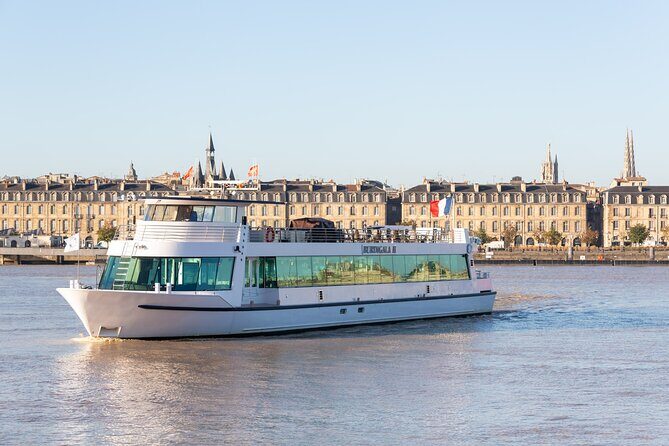
Bordeaux also shows its modern side along the Garonne.
You’ll pass the Jacques Chaban-Delmas Bridge, an elegant modern lifting bridge designed to let large ships pass. From the cruise, it’s easy to see how Bordeaux manages the mix of tourism and heavy river traffic. It’s a reminder that the river isn’t just scenery—it’s infrastructure.
Then you get the Pont d’Aquitaine, a striking structure that stretches 2.5 kilometers over the river. The distance matters because it changes the feeling of the view. Instead of a compact “window,” you get a long river panorama, with the city stretching out behind it.
If you like modern architecture, this segment is where the cruise starts to feel like more than a checklist. You’re seeing how the city’s present-day form works with the river system that brought its wealth in the first place.
The Port de La Lune, Port de Bassens, and the working river reality
The cruise doesn’t only orbit the pretty postcard zones. It also brings you past parts of the river connected to commerce, including the Port de La Lune and sailing toward Port de Bassens as part of the route.
You then reach the autonomous port of Bordeaux, described as a major commercial center on the Garonne. This area is fascinating for a different reason. You’re watching a working landscape: modern infrastructure, large ships, and real port activity. It gives context for why the river mattered historically and still matters today.
If your travel style includes seeing how cities actually function, this part is a big value. Most Bordeaux sightseeing is about stone, wine, and culture. Here you get the engine room that makes the whole thing run.
La Cité du Vin: a modern wine landmark that fits the tasting moment
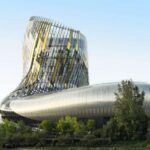
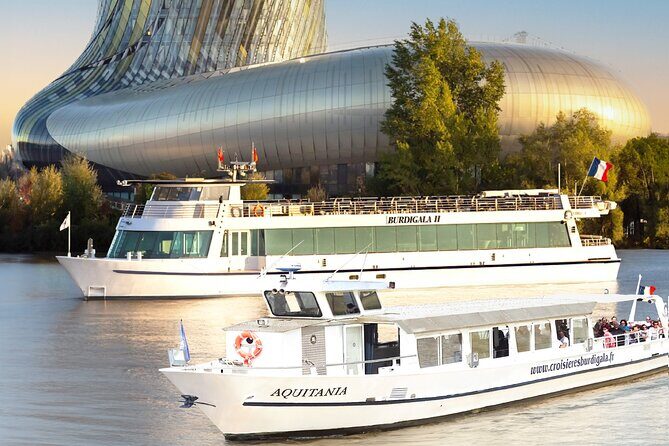
One of the stops listed is La Cité du Vin, an innovative wine museum with interactive exhibitions, tastings, and workshops. Even if you don’t plan to enter during the cruise, you get a useful visual connection between what you’re tasting onboard and what you could explore on your own later.
I like this pairing because it answers a common travel question: what should I do with Bordeaux wine beyond buying a bottle? The museum gives you a pathway—learn the culture, not just the product.
The cruise timing keeps things simple. You get a guided glance at the area, and then you can decide whether you want to follow up separately.
Price and value: why $21.97 can actually make sense here
At $21.97 per person, this isn’t the cheapest way to do Bordeaux, but it also isn’t trying to be a full-day wine program. The value comes from the mix of three things:
- A guided cruise that covers multiple major viewpoints from the water
- Included wine (or soft drink) and a canelé
- Landmark concentration that would take you much longer on foot
In other words, you’re paying for time saved. You’re also paying for a guided explanation while you’re moving, which is often where a short trip wins.
The only serious value concern is language. If you rely heavily on English and the onboard guide is French-first, you may feel the “guided” part doesn’t work as well. That’s where the included sweetness and wine help keep the experience enjoyable even if the commentary isn’t fully in your language.
Wine and canelé: a small tasting that connects to the sights
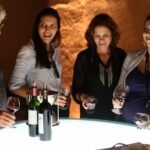
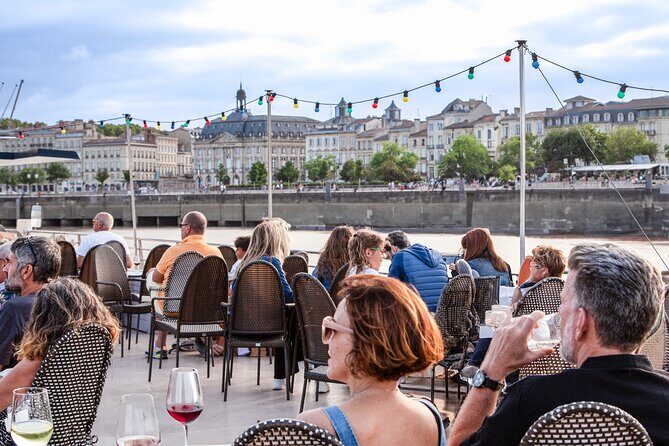
The cruise includes a glass of local wine and a Bordeaux canelé. That matters because it turns your attention to flavor in the middle of sightseeing. You’re not just looking at Bordeaux; you’re tasting a local signature right alongside the city that produced it.
For minors, the wine is replaced by a soft drink. Service animals are allowed, which is a thoughtful detail if you travel with a companion.
Quality seems to vary depending on the guide and format. On some runs, the wine and canelé are described as good quality and the onboard team does a strong bilingual job. On other runs, the onboard info may be limited, and the guide may speak mostly French.
The guide and language factor: how to get the most from the narration
This is where you should set expectations.
Some cruises are run with guides who do a great job presenting the route in both French and English, and the onboard team can feel like a small show. On other runs, the guide may deliver most of the commentary in French, and any English materials can be limited.
What should you do with that? Here’s the practical move: treat this cruise as a visual tour with tasting, and treat the narration as a bonus. If you speak at least some French, you’ll catch more. If you’re English-only, you’ll still get value from the landmark sequence and the tasting, but you may not get deep factual detail.
If you’re a detail-hungry traveler who wants names, dates, and stories in English for every stop, this is worth verifying based on what you prioritize for your day.
Weather, timing, and how to plan the rest of your day
Because it’s on the Garonne outdoors, the tour needs good weather. If weather cancels it, you’ll get another date or a full refund, so you won’t be stuck with a dead ticket.
The good planning angle: since you’re on the river for only 1h30, you can schedule this either before or after a long walk. I like doing it early, so later you know what you’re looking at. But if you’re already comfortable with Bordeaux, doing it later gives you a “second view” that makes the city click.
Should you book this Bordeaux Cruise Wine and Canelé Discovery?
Book it if you want:
- A short, guided way to see a lot of Bordeaux waterfront highlights
- Included wine and canelé without extra planning
- A mix of classic views and a look at the working port
Skip it or be cautious if:
- You need English-heavy factual narration for every stop
- You expect long land visits at each landmark rather than viewpoints from the deck
- You’re traveling on a day with questionable weather and can’t flex plans
FAQ
What’s included in the Bordeaux cruise?
You get a guided cruise plus a glass of wine (or a soft drink for minors) and a Bordeaux canelé.
How long is the cruise?
The experience lasts about 1 hour 30 minutes.
Where do I meet the tour?
You start at the Pontoon of honor, Quai Richelieu, 33000 Bordeaux, France.
Does the tour end at the same place?
Yes. The activity ends back at the meeting point.
Is the cruise suitable for most travelers?
Yes, it says most travelers can participate.
Is there an age rule for the included wine?
The included wine is replaced by a soft drink for minors.
What happens if the weather is bad?
The experience requires good weather. If it’s canceled due to poor weather, you’ll be offered a different date or a full refund.
Cancellation: can I get my money back?
You can cancel for a full refund up to 24 hours in advance. If you cancel less than 24 hours before the start time, the amount paid is not refunded.