REVIEW · BORDEAUX
Private tour of Bordeaux by a Bordeaux historian
Book on Viator →Operated by Les Visites d'Hubert - Guide à Bordeaux et sa Région · Bookable on Viator
Bordeaux’s story is written in stone, and this private historian-led walk helps you read it fast. I like how the route strings together big civic places (cathedral, city hall, theatre) with medieval details (old gates and bells), so you understand how the city grew. I also like that the pacing stays practical—most stops are outdoors and free, so you’re not stuck hunting tickets. One thing to consider: it’s up to 14 people in your private group, so if you’re traveling as a tiny party, you may still share the space with others who booked the same slot.
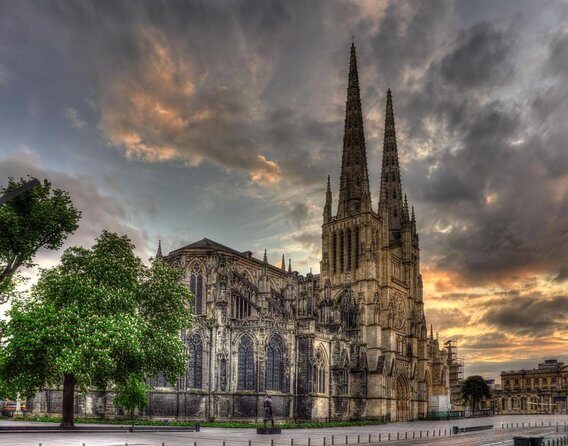
You’ll start at Cathédrale Saint-André de Bordeaux and end at the Monument aux Girondins in Place des Quinconces. Along the way, you’ll hit the places that make Bordeaux feel like a living museum: Rue Saint Catherine, Porte Cailhau, Place de la Bourse with the water mirror (Miroir d’eau), and the Grand Théâtre area. If you want Bordeaux history told as a walking narrative—not just a photo stop—this is a strong match.
In This Review
- Quick hits before you go
- Price and what you actually get for $108 per group
- Start at Saint-André Cathedral: the “why this city looks this way” moment
- Rue Sainte-Catherine and Promenade Sainte-Catherine: how Bordeaux moves at street level
- Place Camille Jullian (Utopia): a quick stop that changes how you read the center
- Grosse Cloche and Porte Saint Eloi: the medieval soundtrack under your feet
- Porte Cailhau: Bordeaux’s old gate with a “read-the-street” lesson
- Eglise St Pierre and Place de la Bourse: symmetry, commerce, and the water mirror
- Grand Théâtre and Place des Quinconces: monuments that explain civic ambition
- The guide factor: Hubert’s history storytelling style
- Timing and walking comfort (the part that affects your day)
- Who should book this private Bordeaux historian tour
- Should you book this tour?
- FAQ
- How long is the Bordeaux private historian tour?
- Is this a private tour?
- What is the group size limit?
- Where do we meet and where does it end?
- Is the tour offered in English?
- Are admission tickets included?
- Will I receive a ticket on my phone?
- Can I cancel for a full refund?
- Can I bring a service animal?
Quick hits before you go
- A historian guiding you through the city’s power centers from cathedral to city hall to theatre
- Mostly free sights so you spend your money on the guide, not entry fees
- Old gates and landmark belfries (Porte Cailhau, Grosse Cloche) tied to real context
- A short, focused route that’s about 2 hours—ideal when you only have a morning or afternoon
- Clear, story-driven explanations in English (with a track record of explaining history in accessible ways)
- Private format: only your group participates, and you’ll use a mobile ticket
Price and what you actually get for $108 per group
At $108.14 per group (up to 14) for about 2 hours, you’re paying for a guide’s time more than paying for admissions. That matters in Bordeaux because lots of the best “wow” moments are simply in the streets—cathedrals, squares, gates, and grand façades—so you don’t need a ticket circus to get value.
Also, this is priced per group, not per person. If you’re traveling with friends or family, splitting that total can make the cost feel very reasonable for a private historian.
A practical note: the tour is offered in English, and you’ll have a mobile ticket. That’s handy in a city where meeting points can be a little crowded around major squares.
Lastly, admissions aren’t fully included. The Hotel de Ville de Bordeaux lists admission as not included, while many other stops are free from the start. So you’ll likely pay little or nothing besides your guide—unless you choose to enter something specific at the city hall.
Other private guided tours in Bordeaux


Start at Saint-André Cathedral: the “why this city looks this way” moment
You meet at Cathédrale Saint-André de Bordeaux on Pl. Pey Berland. This is a great starting choice because a cathedral doesn’t just tell you what faith looked like—it points you to where influence gathered, where money showed up, and how cities set their identity.
From here, the tour lines up into a readable sequence: religious landmark first, then a shift toward civic Bordeaux (street life and local authority), and later toward the theatre-and-monuments side of the story. It’s the kind of order that helps you stop thinking of Bordeaux as one pretty postcard and start seeing it as layers.
Expect the guide to connect architecture to the city’s changing priorities over time. You’ll also get a feel for the geography: this part of Bordeaux is walkable in a way that keeps your brain engaged. You’re not covering miles and miles—you’re collecting key points and letting them explain each other.
Rue Sainte-Catherine and Promenade Sainte-Catherine: how Bordeaux moves at street level
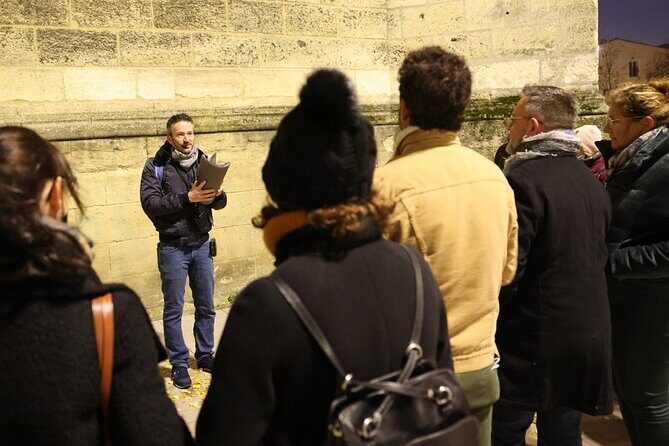
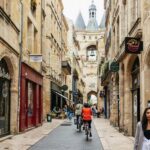
From the cathedral area, you’ll spend time along Rue Saint Catherine and Promenade Sainte-Catherine. This is where Bordeaux becomes human-scale. A big city’s history can sound abstract until you watch how people actually use the space—where they linger, where they pass, and how buildings frame movement.
Why I like this section: street-front history is often the most honest history. You can see how planning decisions shape everyday life. And because this stop is listed as free, it’s a low-friction way to get value early in the walk.
If you’re the type who enjoys “how did they build the city for real life?” questions, this portion hits. If you’re only interested in interiors, you might feel a little more outside-facing here, but the trade-off is that you’ll get a coherent route without waiting around.
Place Camille Jullian (Utopia): a quick stop that changes how you read the center
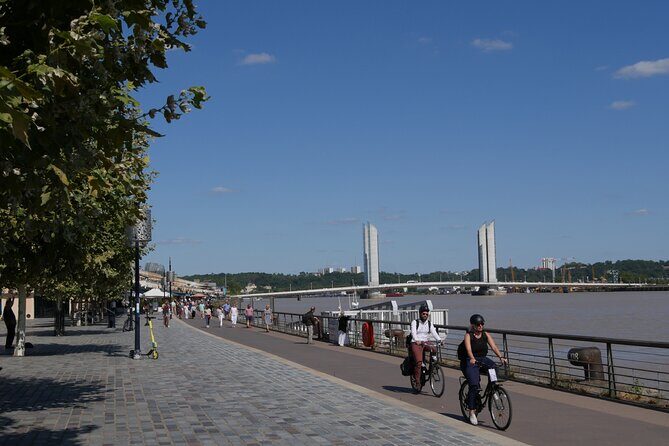
You’ll also pause at Utopia in Place Camille Jullian. Even with a shorter stop time, this kind of waypoint can be useful because it interrupts the “big monuments only” mindset. Instead, you start to notice the way Bordeaux arranges spaces for ideas, gatherings, and civic identity—not just commerce or religion.
It’s also part of what makes this tour feel like a narrative. You’re not randomly hopping between landmarks. The guide is guiding your attention.
This is one of those stops where you’ll get more from the explanation than from the location alone. If you’re the kind of traveler who likes questions answered on the spot, you’ll do well here.
Grosse Cloche and Porte Saint Eloi: the medieval soundtrack under your feet
Next up is Grosse Cloche, tied to the Porte Saint Eloi and the Church of Saint Eloi. This is where Bordeaux history gets practical. Bells, towers, gates—these are the city’s daily tools for timekeeping, communication, and defense. In other words: the Middle Ages weren’t only about drama. They were about systems.
You’ll spend about 15 minutes here. That length is usually just right for seeing the structure, getting context, and then looking at it again with new eyes.
A tip for you here: keep your phone for photos, but don’t let it eat the whole stop. The most useful part is the story that explains what you’re looking at. Towers like this become much more meaningful when you know what they were doing for the city.
Other private tours in Bordeaux


Porte Cailhau: Bordeaux’s old gate with a “read-the-street” lesson
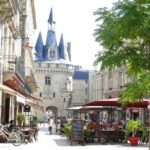
You then reach Porte Cailhau. This stop is listed at about 10 minutes. If you’ve seen one medieval gate, you’ve seen none of them—each one has its own personality, and Bordeaux’s gate carries a sense of arrival and authority.
Why it’s a highlight: it’s positioned as a transition from “city in motion” to “city with memory.” You’ll likely understand more about Bordeaux’s growth by watching how the gate fits into surrounding streets and squares.
Potential drawback: because it’s only 10 minutes, this won’t be a slow “take your time” viewing. If you’re a heavy photography person who wants a long linger, you may want to plan a separate return visit on your own after the tour.
Eglise St Pierre and Place de la Bourse: symmetry, commerce, and the water mirror
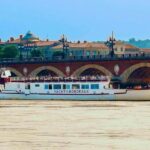
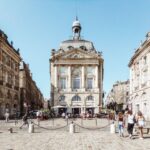
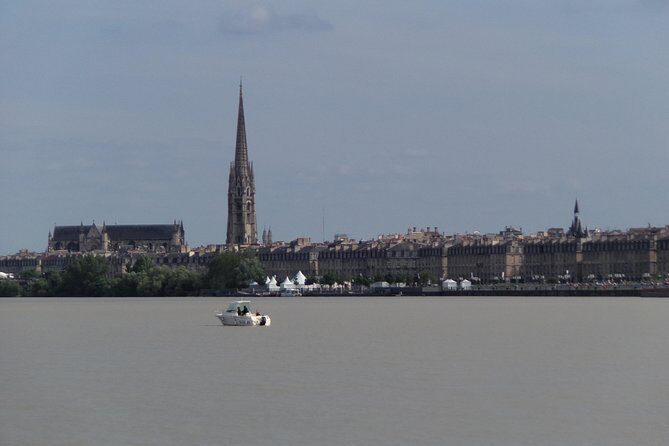
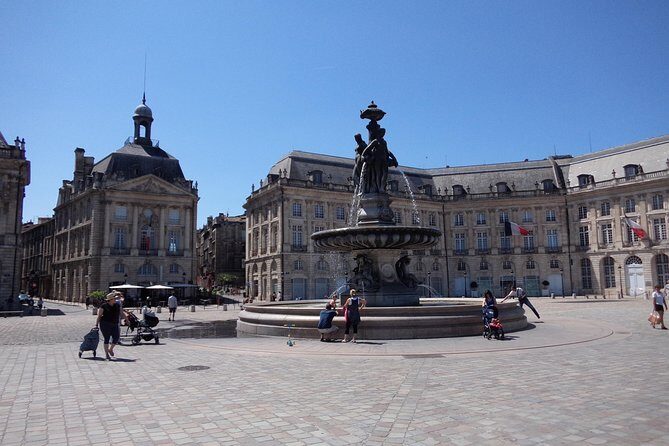
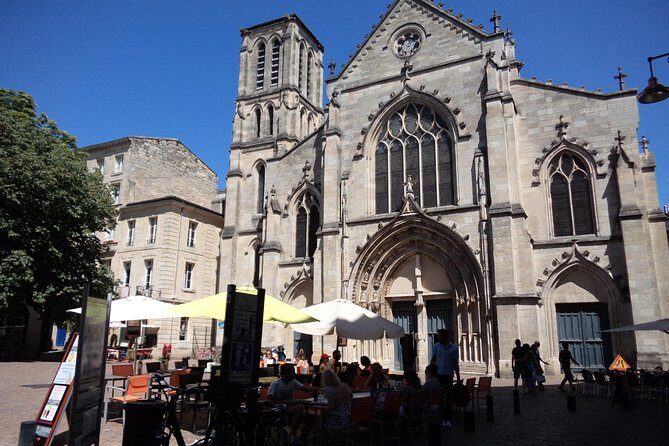
You’ll also visit Eglise St Pierre (about 10 minutes) and then move on to Place de la Bourse with time to see the Miroir d’eau area (about 15 minutes).
This is one of the most visually satisfying sequences on the walk. Churches bring the spiritual layer, while Place de la Bourse brings the economic layer. Put them together and you can feel the balance—and the tension—between values over time: worship, wealth, governance, display.
The water mirror (Miroir d’eau) is a special moment because it turns a square into an effect. Even if you’ve seen photos before, seeing it in person gives you a better sense of why people stop here. It also helps you understand why Bordeaux’s planners like spectacle: they don’t only build functional spaces.
Practical note: many of these stops are free, so this is a good area if you’re trying to keep costs under control. The “only pay for what you choose” feeling is real here.
Grand Théâtre and Place des Quinconces: monuments that explain civic ambition
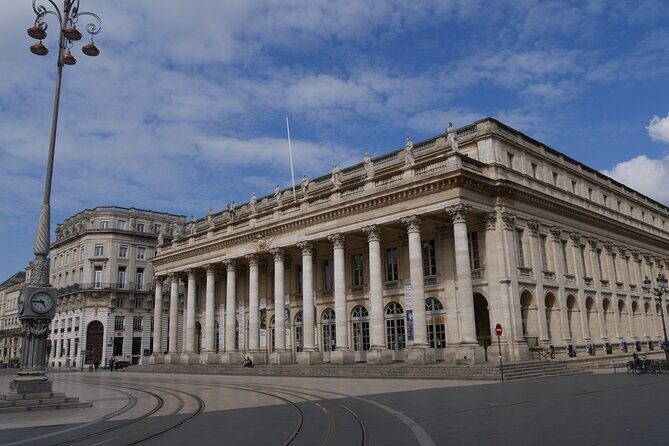
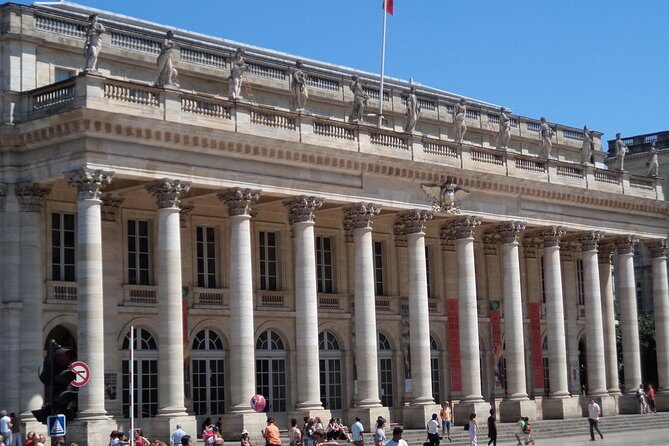
You’ll reach Grand Theatre (about 15 minutes) and then head to Esplanade des Quinconces (about 10 minutes) before ending at Monument aux Girondins.
The Grand Théâtre area is where Bordeaux history shifts toward public culture and prestige. A theatre isn’t just entertainment. It’s a statement about identity—what the city values, what it wants to show the world, and how it imagines itself.
Then you finish in the Quinconces zone, with monuments tied to the Girondins. This ending works because it gives you a sense of scale. You’ve been collecting details all morning (cathedral, gate, belfry, square), and then the city turns the volume up.
If you like viewpoints and open-space moments, you’ll probably enjoy this finish a lot. If you’re tired of walking by then, pace yourself and let the guide do the “connecting the dots” work while you recover your legs.
The guide factor: Hubert’s history storytelling style
This tour is led by Les Visites d’Hubert, described as a Bordeaux guide with historian focus. The strongest praise in the feedback centers on explanations that are clear, precise, and genuinely tied to why things matter—not just what things are.
A pattern you can expect from Hubert’s approach: he’s good at turning architecture into meaning and keeping the tour moving with short, confident segments. In past experiences, he’s been praised for adapting explanations to different audiences, including younger students, and for teaching in more than one language when needed. For you, that typically translates to: fewer long lectures, more “look here, now understand why.”
Also, the tour maintains a tight route. You don’t spend the whole time stuck in one spot. You see a lot, but you also get the context to make it stick.
Timing and walking comfort (the part that affects your day)
The tour is listed at about 2 hours, so you should plan it like a brisk city walk. The stops are short enough that you won’t get stranded at any single location for too long, but the overall sequence still adds up.
This matters because Bordeaux can be warm, and it’s an outdoor-heavy route. Bring water and a light layer. Comfortable shoes are a bigger deal than you think when you’re bouncing between squares and gates.
Good news: the tour is near public transportation, and it’s designed so most people can participate. Service animals are also allowed, which is a helpful practical detail.
If you’re someone who gets restless on long museum-style tours, you may actually like this format more than a traditional indoor itinerary.
Who should book this private Bordeaux historian tour
You’ll likely love this tour if:
- you want a history-first Bordeaux that still feels walkable and practical
- you enjoy understanding landmarks in context (not just collecting photos)
- you prefer a short 2-hour outing instead of a half-day commitment
- you’re in a group where the per-group price makes sense
It might be less ideal if:
- you need a lot of indoor time (most of the route is outdoors)
- you want long stays at just one attraction for deep photo work
- your group size is so large that you’ll feel crowded during short stops (the max is up to 14)
Should you book this tour?
If your goal is to get oriented and understand why Bordeaux looks the way it does, yes, book it. The price per group is a good deal for a private historian, and the route covers the city’s key “readable” moments: cathedral → civic streets → medieval gate pieces → trade square → theatre and monuments.
I’d especially recommend it if you’re doing Bordeaux for the first time and you want a tour that helps your self-guided wandering afterward make sense. You’ll know what you’re looking at when you come back to the same squares on your own.
FAQ
How long is the Bordeaux private historian tour?
The tour is about 2 hours (approx.).
Is this a private tour?
Yes. It’s a private tour/activity, and only your group will participate.
What is the group size limit?
The price is per group up to 14 people.
Where do we meet and where does it end?
You meet at Cathédrale Saint-André de Bordeaux, Pl. Pey Berland, 33000 Bordeaux, and the tour ends at the Monument aux Girondins, 2792 Pl. des Quinconces, 33000 Bordeaux.
Is the tour offered in English?
Yes. The tour is offered in English.
Are admission tickets included?
Not fully. Hotel de Ville de Bordeaux lists admission as not included, while other listed stops are free.
Will I receive a ticket on my phone?
Yes. The tour includes a mobile ticket.
Can I cancel for a full refund?
Yes. You can cancel up to 24 hours in advance for a full refund.
Can I bring a service animal?
Yes. Service animals are allowed.
—
If you tell me your travel month and whether you prefer more photos or more talking, I can suggest the best time of day to schedule this so you get the most from Place de la Bourse and the water mirror area.