REVIEW · BORDEAUX
The Most Complete and Best Rated Tour of Bordeaux
Book on Viator →Operated by Walk is Free · Bookable on Viator
Bordeaux hits hardest on foot. I like the included Cathedral/Basilica access and the guaranteed Water Mirror stop, which gives you a proper Bordeaux postcard moment. One thing to consider: it’s a paid walking plan at about 2–3 hours and $119.72 per person, so if you want lots of indoor museum time or zero walking, this may feel pricey.
What makes it work is the human touch. Guides like Pascale, Elisa, Nicolás, and Raphael turn street corners into stories, and they keep the pace comfortable, even when you want extra time to ask questions or slow down. You’ll also end right by the water, on the quay, where Bordeaux looks its best.
In This Review
- Key highlights at a glance
- Get your bearings fast: a Bordeaux walk that hits the big ideas
- Opéra National de Bordeaux to Place de la Comédie: the city’s grand intro
- Place Gambetta and Dijeaux Gate: old city structure under modern streets
- Tour Pey-Berland and the cathedral zone: church power + civic power
- Grosse Cloche and Saint James Street: the bell, the arch, the story
- Saint-Michel area and Basilique Saint-Michel: a neighborhood that smells like life
- Marché des Capucins: wine, cheese, coffee, and quick local reality
- Porte Cailhau to Pont de Pierre: gates and the river crossing
- Place de la Bourse and the Water Mirror: the classic finale spot
- Porte de Bourgogne and Galerie des Grands Hommes: finishing with old-city elegance
- Price and pace: is $119.72 per person worth it?
- Who should book this tour (and who might want a different style)
- Should you book this Bordeaux walking tour?
- FAQ
- How long is the Bordeaux walking tour?
- Where does the tour start and where does it end?
- Is the tour private?
- What language options are available?
- What’s included in the price?
- What is not included?
- Do I need a ticket for the Water Mirror?
- Is the tour mostly walking, and can most people participate?
- Are service animals allowed?
- Can I cancel for a full refund?
Key highlights at a glance
- Private group experience: only your group walks with the guide.
- English (or Spanish) guide with a mobile ticket for easier check-in.
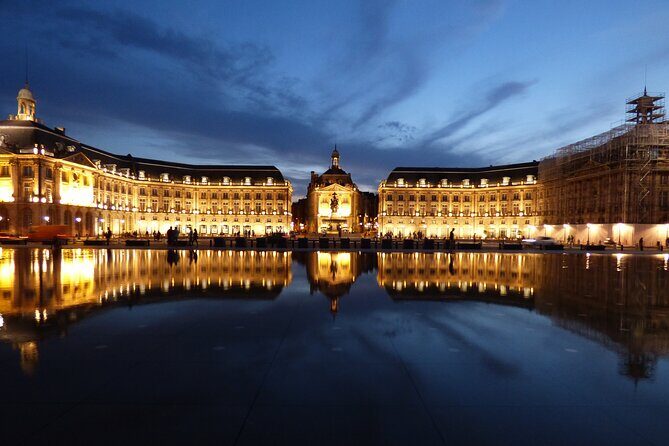
- One end spot you’ll want to see: Miroir d’eau / Espejo de Agua on the Quai de Bordeaux.
- Included entry: Cathedral of Bordeaux and/or Basilica of Saint-Michel, plus the Water Mirror ticket.
- Classic Bordeaux sequence: opera house, grand squares, medieval gates, and major bridges.
- Market stop with real food vibes: Marché des Capucins for cheese, wine, coffee, and prepared bites.
Get your bearings fast: a Bordeaux walk that hits the big ideas
If you’re short on time, this is the kind of tour you want on day one. You’ll cover central Bordeaux in a tight loop, moving from grand civic landmarks to old-town streets, then finishing by the river. In other words: you get the layout of the city, plus the why behind the look.
I like that it’s built around landmarks you can actually revisit later. Places like Place de la Comédie, Place de la Bourse, and the gates of the old city aren’t just pretty stops; they explain how Bordeaux grew into a major power.
The format is simple: multiple short stops (often around 10–15 minutes) means you won’t feel stuck in one long lecture. You should still wear comfortable shoes, because the whole point is walking the center.
If you're still narrowing it down, here are other tours in Bordeaux we've reviewed.
Opéra National de Bordeaux to Place de la Comédie: the city’s grand intro
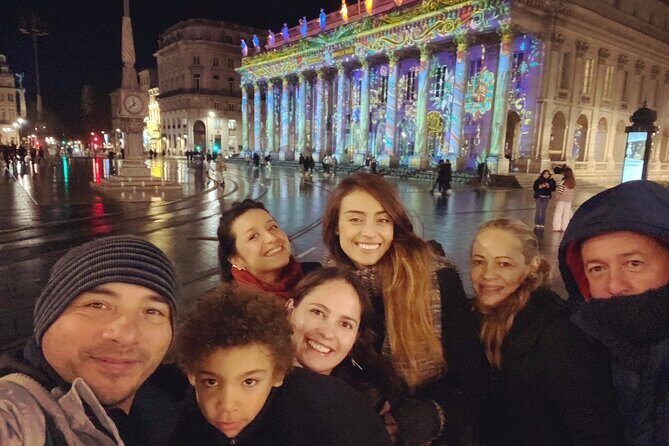
The tour starts at Opéra National de Bordeaux, the Grand-Théâtre area at Pl. de la Comédie. Even if you don’t go inside the opera, you’ll get the big-picture feeling right away: Bordeaux knows how to present itself.
From there, you move into Place de la Comédie, where the Bordeaux Grand Hotel and nearby art details set the tone for the city’s “showpiece” side. This is where you start to understand the rhythm of Bordeaux: wide squares for gatherings, then tight streets as you head toward the older heart.
Practical tip: stand with your back to the buildings facing the square, and let the guide point out what changed over time. It helps the whole city click into place.
Place Gambetta and Dijeaux Gate: old city structure under modern streets
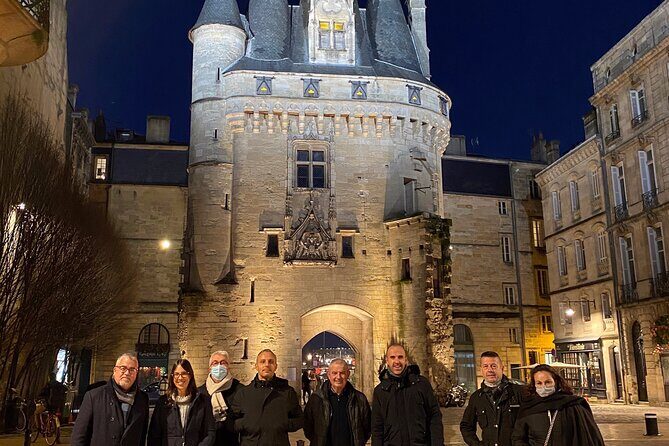
Next up is Place Gambetta, with the Dijeaux Gate nearby. This area is a good reminder that Bordeaux’s medieval layers didn’t disappear when the city expanded; they got folded into the streets you see today.
You’ll also start noticing a theme the guide keeps coming back to: gates, walls, and crossings. Bordeaux wasn’t built randomly. It was shaped by movement—people, trade, and power.
This stop is mostly about seeing and listening, not about buying tickets. If you want photos, aim for a spot where you can frame the gate lines with the street behind you.
Tour Pey-Berland and the cathedral zone: church power + civic power
At Tour Pey-Berland, you’re in the zone that links Bordeaux Cathedral and the city’s civic identity. The Pey-Berland bell tower is named after its patron, and the separate tower setup makes it feel like part of a larger message: religious authority and public life sitting side by side.
This is one of the best stops for “context,” because it helps you read the rest of the city afterward. When you understand why certain buildings were placed and built, the walk stops feeling like a checklist.
The tour includes entrance to the Cathedral of Bordeaux and/or Basilica of Saint-Michel. If you’re choosing what to prioritize, keep in mind that this is where indoor time matters most, since it’s not just another exterior photo.
Grosse Cloche and Saint James Street: the bell, the arch, the story
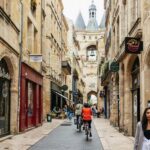
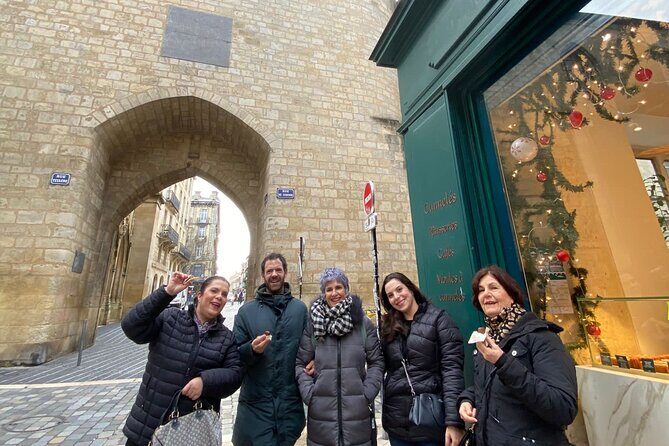
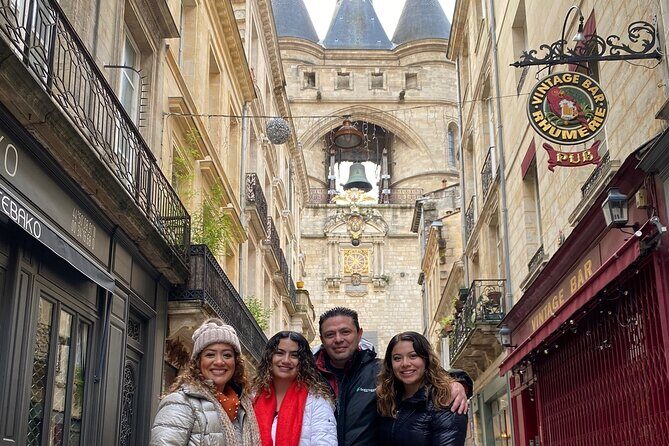
Then you hit Grosse Cloche near Saint James Street and the Gate of the Great Bell. The whole point here is scale: it’s one of those Bordeaux features that looks instantly recognizable once you’ve seen it, even if you’ve never been here before.
The guide’s job at a stop like this is to connect the bell tower landmark to the bigger city system. Think: street passageways, old gate lines, and why Bordeaux kept building these impressive markers.
This is a good stretch for questions. If you ever wonder what a specific street name means or why certain areas feel older, this is where the guide can tie those ideas together.

Saint-Michel area and Basilique Saint-Michel: a neighborhood that smells like life
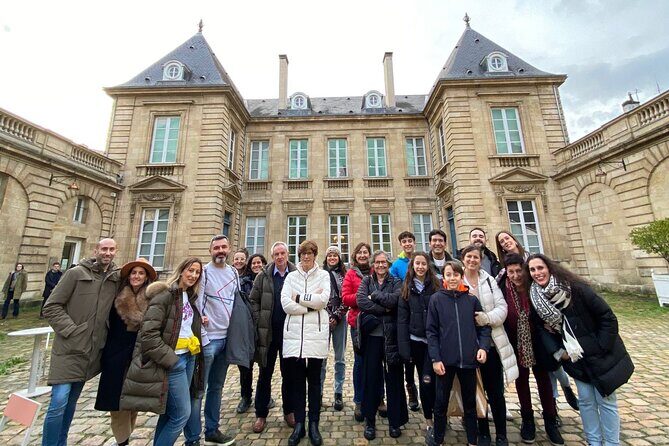
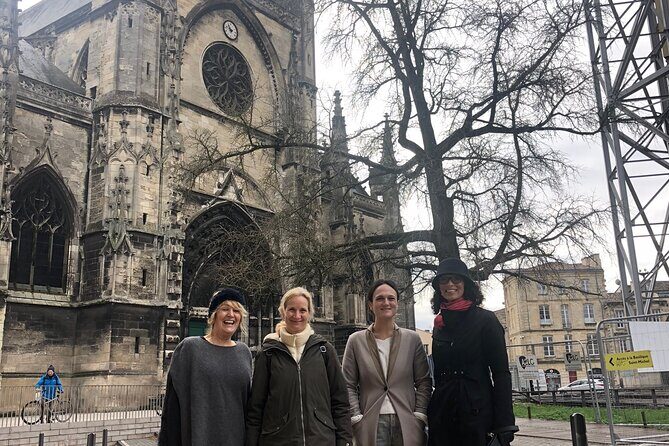
Basilique Saint-Michel brings you into the Saint-Michel neighborhood. This is one of the more atmospheric parts of the route because the architecture feels close and human-scale.
If your booking includes Basilica entry, you’ll get a chance to step inside. Even if you don’t, you’ll still appreciate how the basilica anchors the neighborhood.
A note on timing: this stop is short, so if you love churches for their interiors, tell the guide you want a couple extra minutes. They can adjust the pacing so you don’t rush the details.
Marché des Capucins: wine, cheese, coffee, and quick local reality
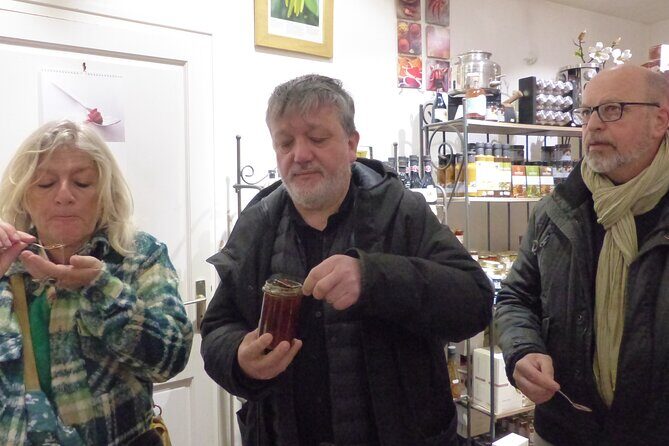
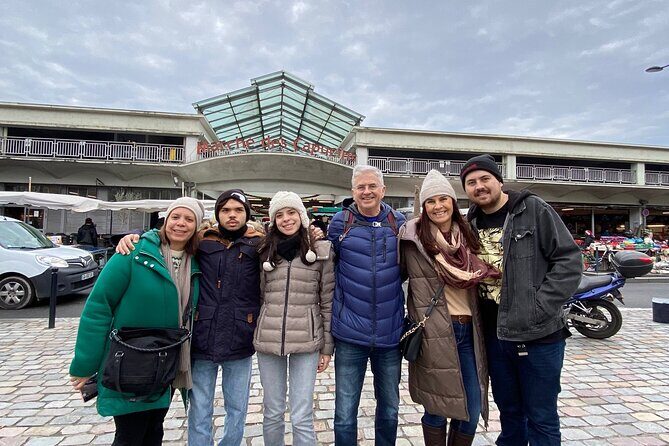
Next comes Marché des Capucins, the tour’s food-feel pause. This is described as the most traditional market in the city, and that shows in what’s around you: local products, cheese and wine, plus prepared meals and coffee.
You won’t turn this into a full meal stop, but it’s one of the smartest ways to experience Bordeaux beyond stone and statues. Market stops also help break up the walking, so the rest of the route feels easier.
If you’re the type who likes to taste your way through a city, this is where you’ll naturally want to sample. If you’re not, even watching what people buy makes the place feel lived-in.
Porte Cailhau to Pont de Pierre: gates and the river crossing
After the market area, you move to Porte Cailhau, a castle-like gate that used to serve as a main entrance to the city. It’s one of those landmarks that instantly makes you think about defense and trade at the same time.
Then it’s on to Pont de Pierre, the stone bridge that connects to Victor Hugo Avenue. This bridge is where the city’s story starts to read differently. You’re not only looking at old Bordeaux—you’re watching the old city connect to the wider region along the Garonne.
Try to get a slightly different angle from what you see at street level. If your guide points out where to stand for photos, follow that advice. It’s one of those “you’ll be glad you listened” moments.
Place de la Bourse and the Water Mirror: the classic finale spot
Place de la Bourse is where the tour becomes very photogenic. You’ll see the Stock Exchange Square and the Quay de Bordeaux setting, including the Puerto de la Luna area nearby. It’s a “Bordeaux at its postcard best” kind of stop.
Then comes the Water Mirror (Miroir d’eau), with the ticket included. This is one of those places that feels almost too perfect until you’re standing there and realizing it’s real, not a filter.
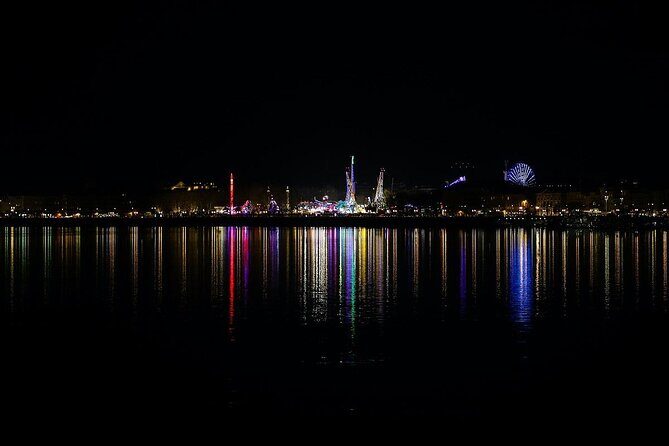
If you time it right, the reflections can look dramatic. Even if it’s not your best light, the scale and design still land. Either way, you end the tour in this exact zone, in front of the Plaza de la Bolsa and the Espejo de Agua.
Porte de Bourgogne and Galerie des Grands Hommes: finishing with old-city elegance
After Miroir d’eau, you continue toward Porte de Bourgogne, another major gate, described as the one Napoleon Bonaparte used on his way to Spain. That kind of historical cameo is exactly why gate landmarks matter: they’re where real routes happened.
You’ll also pass La Galerie des Grands Hommes, associated with Bordeaux’s Golden Triangle area. This stop works well as a closer because it gives you a final “you’ve got the whole map now” feeling.
The walk wraps up on the quay near the Water Mirror, so you’re positioned to keep exploring on your own afterward—either strolling along the river or heading into nearby streets for dinner.
Price and pace: is $119.72 per person worth it?
Here’s the deal: you’re paying for a private guide, not a bus ride. The rate is per person ($119.72) and the tour lasts about 2–3 hours with a steady sequence of short stops.
What makes the value feel fair is that the tour includes entrance to the Cathedral of Bordeaux and/or Basilica of Saint-Michel, plus the Water Mirror ticket. That’s not nothing. You’re also not just getting exterior photo stops; you’re getting a guided route that explains why these sites matter in the city’s story.
Still, there’s one clear drawback to weigh. Some parts of the route are exterior viewing (like gates and squares), so if you expect museums or long indoor time, you may feel underwhelmed. One review-style complaint you’ll hear with walking tours is simple: you’re paying for walking, even when you’re not paying for lots of admissions.
My practical take: book this if you want orientation and context fast. Skip it if your main goal is indoor museum depth.
Who should book this tour (and who might want a different style)
This tour is a strong fit if:
- You want a center-city overview without complicated planning.
- You like history tied to streets, not just plaques.
- You travel as a small group and value a private pace.
- You want a market stop with food options and real local flavor.
It can also work well for families, since the guide approach tends to be patient and story-driven. I’ve seen this type of tour succeed with kids when the guide keeps it upbeat and answers questions without making anyone feel rushed.
You might choose something else if:
- You hate walking or need frequent rest stops beyond a normal sightseeing pace.
- You’re mainly looking for a museum-heavy itinerary.
Should you book this Bordeaux walking tour?
If this is your first (or only) half-day in central Bordeaux, I’d book it. You’ll get a smart route, a clear storyline from opera-squared to river-reflection, and included entry for the Cathedral/Basilica plus the Water Mirror.
It’s also one of the easiest ways to start picking your own priorities afterward. Once you’ve seen Place de la Comédie, Place de la Bourse, and the major gates, you’ll know exactly where you want to return for dinner, photos, and slower exploration.
Just go in with the right mindset: this is a walking orientation with key indoor moments, not a full-day museum marathon.
FAQ
How long is the Bordeaux walking tour?
It runs about 2 to 3 hours.
Where does the tour start and where does it end?
You start at Opéra National de Bordeaux – Grand-Théâtre, Pl. de la Comédie, 33000 Bordeaux, France. You end at Miroir d’eau, Pl. de la Bourse, 33000 Bordeaux, France, on the Quai de Bordeaux in front of the Plaza de la Bolsa and Espejo de Agua.
Is the tour private?
Yes. It’s a private tour/activity, and only your group participates.
What language options are available?
The guide is offered in English (and English or Spanish depending on booking).
What’s included in the price?
The tour includes an exclusive guide in your booking language and entrance to the Cathedral of Bordeaux and/or Basilica of San Miguel. The Water Mirror stop also includes admission.
What is not included?
Museum entrances and any other unspecified places are not included. The Grand Théâtre stop specifically notes admission ticket not included.
Do I need a ticket for the Water Mirror?
Yes, the Water Mirror admission is included in the experience.
Is the tour mostly walking, and can most people participate?
This is a walking tour with several short stops, and most travelers can participate. It is also near public transportation.
Are service animals allowed?
Yes, service animals are allowed.
Can I cancel for a full refund?
Yes. Free cancellation is available up to 24 hours in advance for a full refund. If you cancel less than 24 hours before the start time, the amount paid is not refunded.