REVIEW · BORDEAUX
Make your own cuvée of Bordeaux wine
Book on Viator →Operated by Le Pied à Terre · Bookable on Viator
If you want more than a sip-and-stand tour, this is for you. In Bordeaux, this workshop at Le Pied à Terre lets you play winemaker: you taste selected single-varietal wines, learn what each grape brings to the glass, then build a custom blend. It’s hands-on, not just slideshow wine education.
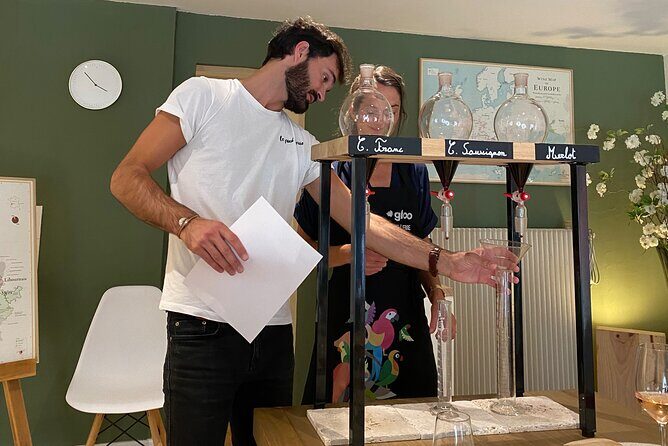
What I like most is the mix of structure and play. You get guided tasting so you can smell and taste Merlot, Cabernet Sauvignon, and Cabernet Franc as distinct characters, then you experiment with your own percentages using tubes and pipettes. I also really like the fact that you can leave with a souvenir that feels personal: your blend in a bottle labeled with your name.
One possible consideration: the name can sound like you’re making wine from scratch, but this is mainly blending and tasting. You may end up with relatively small pours during the tasting portion, so go in expecting a workshop, not a full drinking session.
In This Review
- Key highlights at a glance
- Le Pied à Terre: stepping into a real Bordeaux workshop
- What you really do in the blending workshop
- The tasting phase: how they teach your nose and palate
- Building your own Bordeaux cuvée with tubes and pipettes
- The Basque bites: cheese and charcuterie support the tasting
- Timing and group size: why 2.5 hours feels just right
- Price and value: what $71.20 buys you in Bordeaux terms
- When this workshop might not fit your style
- Quick practical tips before you go
- Should you book this Bordeaux cuvée workshop?
- FAQ
- How long is the Bordeaux cuvée workshop?
- What is included in the experience?
- Where does the workshop start?
- How much does it cost?
- Is the workshop offered in English?
- What if the weather is bad or the group minimum isn’t met?
Key highlights at a glance
- Le Pied à Terre cellar setting: a warm, workshop-style environment in central Bordeaux
- Blending lesson built around Bordeaux grapes: Merlot, Cabernet Sauvignon, Cabernet Franc
- Tasting you can use later: aromatics, palate cues, and how balance shows up in a blend
- Your own cuvée method: you experiment with the proportions using tubes and pipettes
- Small group size (max 12): easier questions and more attention during the tasting
- Take-home bottle option: your custom blend, labeled with your name
Le Pied à Terre: stepping into a real Bordeaux workshop
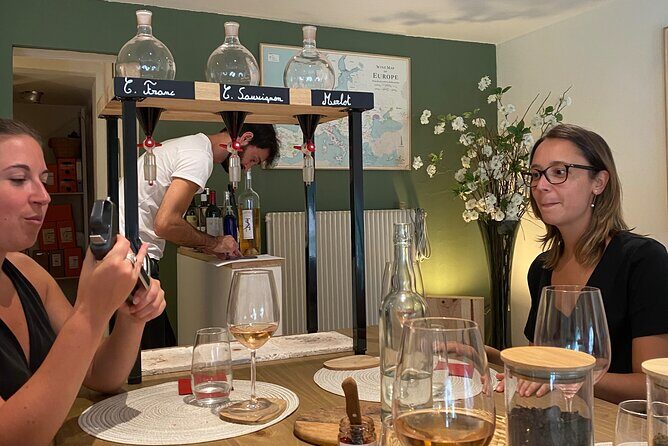
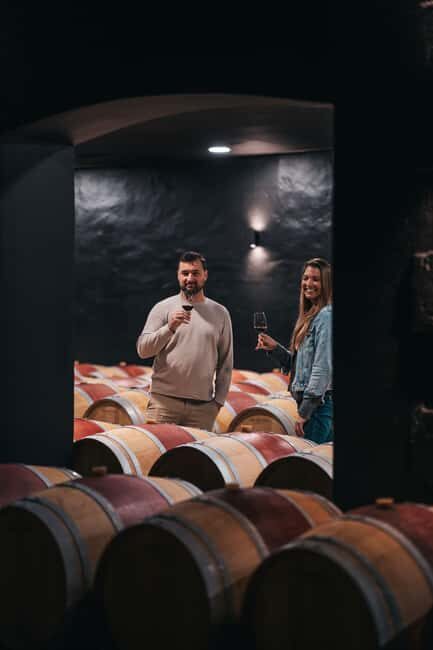
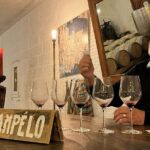
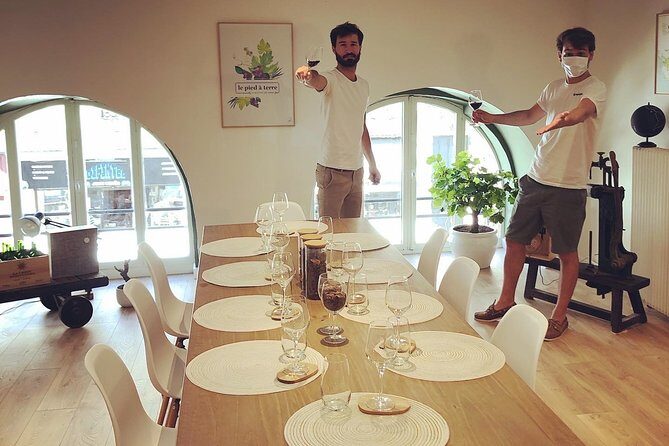
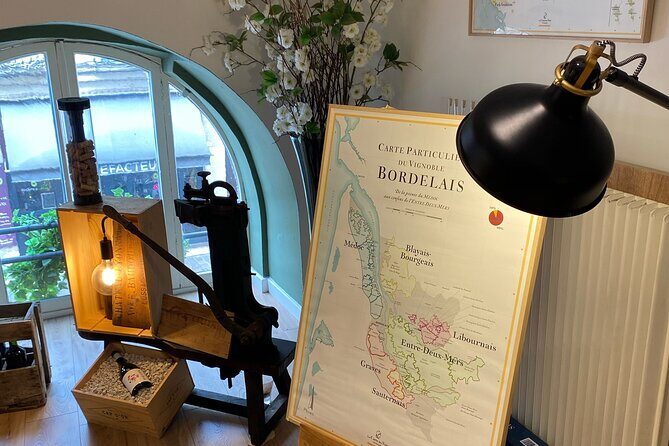
This experience starts at Le Pied à Terre, at 22 Rue Judaïque, in the city center. The setting matters here. You’re not herded through a big tasting hall, and you’re not stuck in a loud, public space where conversations die. Instead, you’re in a cellar workshop atmosphere that feels made for learning by doing.
The session is designed to run for about 2 hours 30 minutes, and it stays small: the group is capped at 12. That size is one of the reasons it works so well. When you’re learning the difference between grapes and how they affect structure and aromas, you want to be able to ask quick questions and compare notes with the guide.
Language is another practical win. The experience is offered in English, which means you can follow the aromatics lesson without guessing. You also get a mobile ticket, so you’re not dealing with last-minute printouts or paperwork.
Other wine tours in Bordeaux
What you really do in the blending workshop
The core idea is simple: you create a Bordeaux cuvée. But it helps to understand what that means in practice. Bordeaux blending usually means balancing grape traits—think fruit, tannins, acidity, and aromatic lift—so the final wine tastes coherent, not like a random mix.
In this workshop, the program builds around emblematic Bordeaux varieties: Merlot, Cabernet Sauvignon, and Cabernet Franc. You’ll be guided by the team at Le Pied à Terre (the instruction is described as led by James, and the program is also associated with Pierre and Geoffroy). The point is that you’re learning not only what these grapes taste like, but also how they behave when you combine them.
Here’s what you should expect to feel as you go:
- At first, the grapes may seem like separate flavors.
- Then, once you start adjusting proportions, you notice balance changing in your glass.
- By the end, your blend feels like something you can explain, not just something you happened to like.
That’s why this isn’t only “fun.” It’s a transferable skill you can use later when you’re choosing bottles in Bordeaux—or back home.
The tasting phase: how they teach your nose and palate
You start with tasting and guided learning before you start building your blend. This is a key part of the value. If you try to blend without tasting guidance, it becomes guesswork. Here, the tasting sets you up so your final cuvée reflects your preferences, not just your luck.
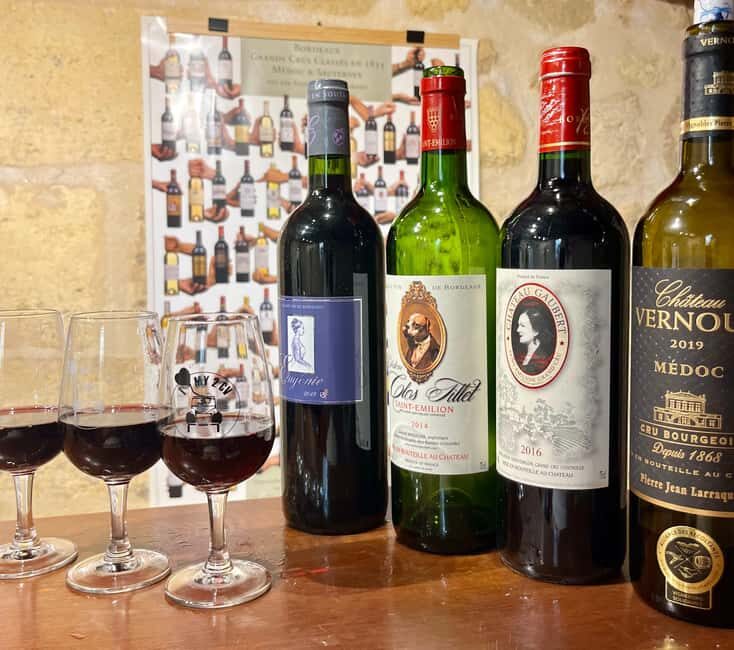
You’ll be introduced to grape variety traits and the typical aromatic profiles linked to Bordeaux reds. Then you move through practical steps so you learn how to describe what you’re tasting. One helpful detail from the way the class is run is the use of a blind tasting format, which pushes you to rely on your senses rather than the label in front of you.
During this portion, you’re also learning how tasting technique connects to the goal of blending. You’ll get prompts related to smell, taste, and balance—things like tannin feel and how acid and fruit play together. You don’t need to be a wine person to benefit. The structure is made for people who want to understand what they’re experiencing, fast.
A bonus that shows up for many groups: you get food during the workshop. That matters because it keeps the tasting from feeling like nonstop sipping in a vacuum.
Building your own Bordeaux cuvée with tubes and pipettes
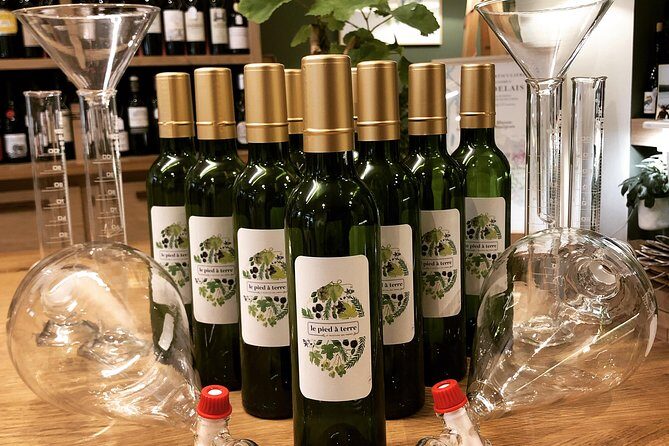
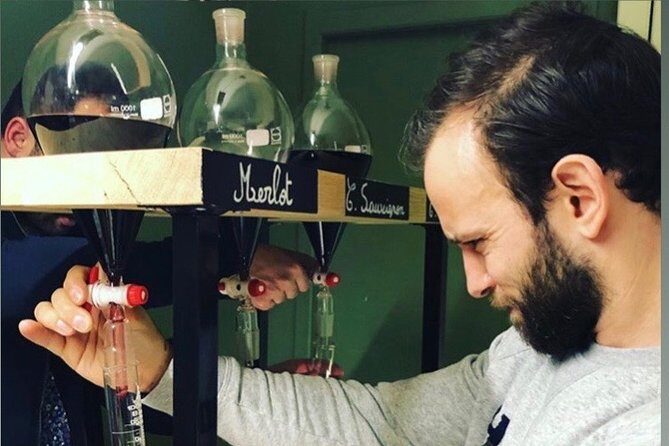
Now comes the part people remember. You experiment with personalized blends using tubes and pipettes, which is exactly the kind of hands-on tool that makes blending click.
In practical terms, you’re not “making wine” in the winery sense. You’re creating your blend recipe—your chosen proportions—based on the tasting notes you picked up earlier. It’s a workshop version of the decision-making winemakers do: which grape contributes structure, which adds fruit, and which brings aromatic lift.
As you adjust the ratios, you’ll likely notice patterns such as:
- Cabernet Sauvignon often reads as more backbone and tannic structure.
- Merlot tends to give a smoother, fruit-forward feel.
- Cabernet Franc can bring a different aromatic tone and complexity.
Even if you don’t know those labels yet, the guide’s job is to connect what’s in front of you to what it does in the blend. That makes your final result feel earned.
And yes, you can take something home. There’s the possibility of taking a bottle labeled with your name. It’s a simple touch, but it changes the mood of the whole workshop. When your blend has your name on it, you pay closer attention—and you’ll actually want to compare it later with other Bordeaux bottles.
The Basque bites: cheese and charcuterie support the tasting
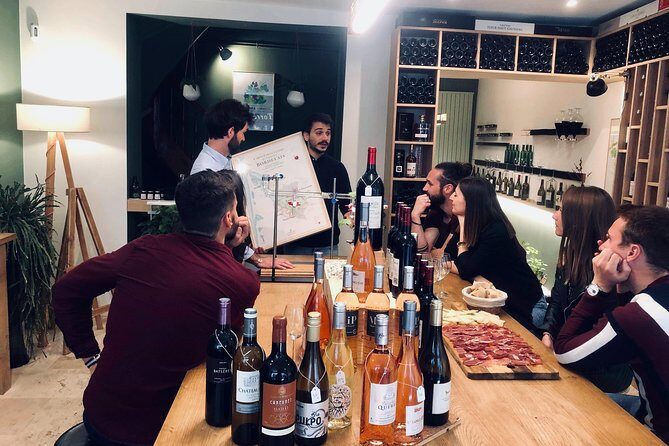
Food is part of the design here, and it’s not an afterthought. The starter is cheese and charcuterie from the Basque Country. Pairing this with Bordeaux tasting helps in two ways.
First, it keeps you from tasting wines while your stomach is empty. That sounds obvious, but lots of tours skip this detail, and then you end up with fatigue and less accurate senses. Second, salty, fatty bites make tannins easier to interpret. You can feel the structure more clearly when your palate has something to respond to.
If you’re doing this early in the afternoon, the food also helps you keep energy up for whatever you do after. You’ll likely walk out with a little confidence—and a bottle to match.
Timing and group size: why 2.5 hours feels just right
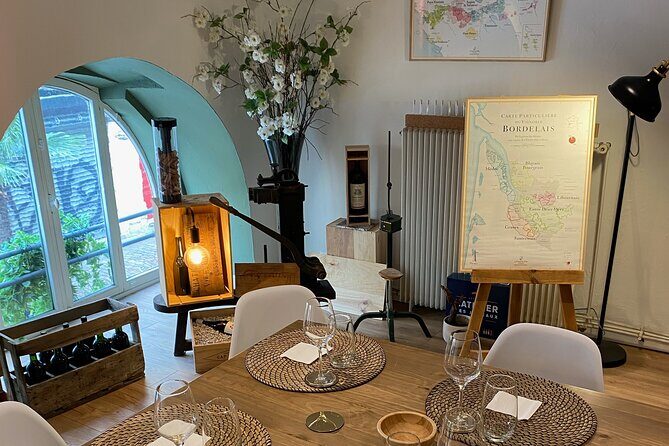
The workshop runs about 2 hours 30 minutes, and that pacing is one reason it works as a Bordeaux “do it once” experience. It’s long enough to teach you how blending works, but short enough that it doesn’t swallow your whole day.
Group size is capped at 12, which keeps things from turning into a lecture theater. You can ask questions when you get stuck. And during blending, you’re not fighting for attention. When someone is adjusting a proportion and wondering what it’s doing, a small group setting makes the feedback more immediate.
If you’re comparing this to other Bordeaux wine activities, this one tends to land in the sweet spot: structured tasting plus hands-on blending, all within a manageable window.
Price and value: what $71.20 buys you in Bordeaux terms
At $71.20 per person, you’re paying for more than a basic tasting. You’re paying for:
- guided instruction in how Bordeaux blends work
- tasting multiple single-varietal wines
- a hands-on blending activity using tools like tubes and pipettes
- small-group attention (max 12)
- a starter of Basque cheese and charcuterie
- and the chance to take home a bottle labeled with your name
In Bordeaux, pricing can vary wildly depending on whether you’re in a big commercial tasting space or a smaller teaching setup. This feels priced like a real workshop. The take-home bottle is also a value anchor: it turns the class from an experience that disappears into something you’ll open later.
If you’re the type of traveler who remembers tours by what you learned—and what you can replay at home—this price makes more sense than a short, label-driven tasting.
When this workshop might not fit your style
This is a red-wine focused experience. If you mainly want white wine, you might feel less satisfied than you hoped. Also, treat the title as “make your blend” rather than “craft wine from grapes.” During the tasting portion, you might only receive small amounts of wine per variety, because the goal is evaluation and learning, not filling your glass.
Finally, timing can matter. The experience is scheduled for about 2.5 hours, and it may feel tight if you add other long activities right before or after. Build in a buffer so you can linger in the shop downstairs or walk off the cellar chill without racing.
Quick practical tips before you go
A few small things can make this smoother:
- Bring curiosity, not wine baggage. If you know zero wine vocabulary, you’ll still follow.
- Expect tasting technique practice. Smelling and tasting is the whole point.
- Plan to ask one question early. Once you understand the first grape’s role, the rest becomes easier.
- If you’re shopping afterward, your brain will be running on blending logic. It helps you compare Bordeaux bottles with more accuracy.
Also note that service animals are allowed, and the location is near public transportation. It’s the kind of central Bordeaux activity that’s easy to plug into a day without a car.
Should you book this Bordeaux cuvée workshop?
I’d book it if you want a Bordeaux experience that’s active, not passive. The combination of a cellar setting at Le Pied à Terre, structured tasting, and the chance to create a personal blend (with take-home results) makes this one of the better “value per hour” wine activities in town.
You might skip it or go with different expectations if you want a long, heavy tasting of lots of wine, or if you thought you were making wine in the winery sense from grape to bottle. This is blending and learning—done well—and it’s exactly the kind of class that can change how you taste Bordeaux for the rest of your trip.
FAQ
How long is the Bordeaux cuvée workshop?
It lasts about 2 hours 30 minutes.
What is included in the experience?
You’ll taste selected single-varietal Bordeaux wines, learn about blending (Merlot, Cabernet Sauvignon, Cabernet Franc), create your own cuvée using tubes and pipettes, and you have the possibility of taking home a bottle labeled with your name. A starter of Basque cheese and charcuterie is included.
Where does the workshop start?
It starts at Le Pied à Terre – Cave à vin & atelier dégustation, 22 Rue Judaïque, 33000 Bordeaux, France. The activity ends back at the meeting point.
How much does it cost?
The price is $71.20 per person.
Is the workshop offered in English?
Yes, the experience is offered in English.
What if the weather is bad or the group minimum isn’t met?
The experience requires good weather. If it’s canceled due to poor weather, you’ll be offered a different date or a full refund. If the minimum number of travelers isn’t met, you’ll be offered a different date/experience or a full refund.