REVIEW · BORDEAUX
Private City Tour of Bordeaux in a Citroën 2CV – 1h30
Book on Viator →Operated by 4 roues sous 1 parapluie Bordeaux · Bookable on Viator
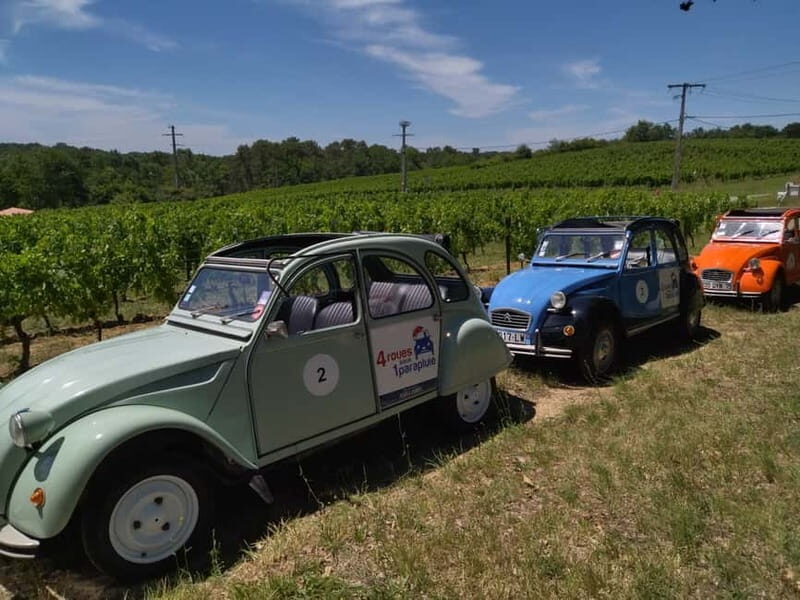
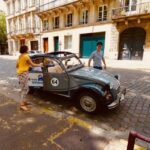
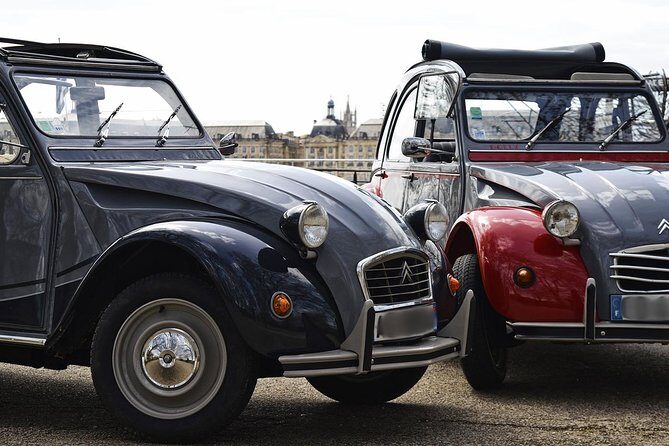
Bordeaux hits different in a 2CV. This private tour is a fast, fun way to see the big highlights without spending your vacation stuck in transit, and the soft-top Citroën 2CV makes even short moves feel like part of the sightseeing. I like that it includes pickup and a return to your starting point, so you can focus on where you’re going, not how to get there.
What I really like is the mix of “old Bordeaux” and “new Bordeaux,” with stops that cover architecture, districts, and major sights like Cité du Vin and the Grand Théâtre. The only drawback to consider is that pickup timing can be sensitive—one cruise-ship pickup issue showed how miscommunication can cut the experience short, so plan for a little buffer if you’re docking that day.
In This Review
- Key things to know before you go
- A Soft-Top Citroën 2CV gives Bordeaux a special pace
- Price and Timing: What $107.24 per person really buys
- The 90-minute route: squares, districts, bridges, and doors
- 1) A giant Bordeaux square and the famous water mirror
- 2) Sainte-Croix vibes and an emblematic church district
- 3) Chartrons and the Rue Notre-Dame antique scene
- 4) The modern wine museum: Cité du Vin
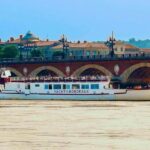
- 5) Two bridge styles: new vertical lift and the oldest crossing
- 6) Medieval doors, a Roman church, and “how to read” façades
- 7) Place-level landmarks: church-and-spire square, cathedral, and city hall
- 8) The XVII/XVIII-era showstopper: the Grand Théâtre area
- Guide energy matters: what makes the tour feel worth it
- Comfort and photo tips: when to enjoy the open roof
- When the route feels perfect, and when it might not
- Should you book this private Bordeaux 2CV city tour?
- FAQ
- How long is the Private City Tour of Bordeaux in a Citroën 2CV?
- What is the price per person?
- Is pickup included?
- Is this a private tour?
- What language is the tour in?
- Is there free cancellation?
Key things to know before you go
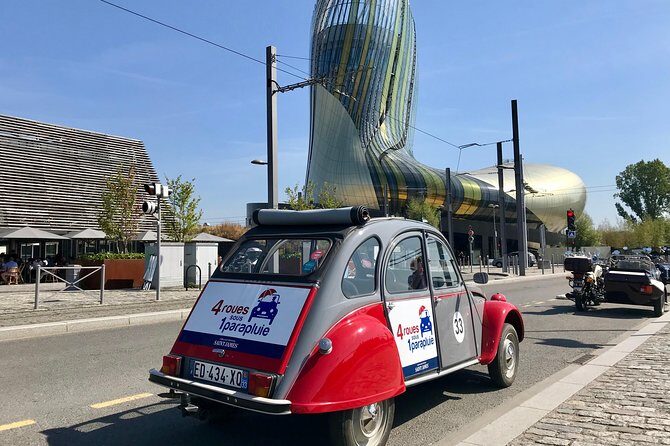
- Soft-top ride for real street-level views: move through neighborhoods with a “showing-off” factor that draws smiles from locals
- A tight 1h30 overview: you’ll cover key squares, bridges, and churches without doing big walks
- Wine is built in: you stop at the modern wine museum area (Cité du Vin) rather than only passing it
- Lots of architecture cues: Roman church, medieval doors, and sculpted Mascarons help you read the city faster
- Bridge-and-banks perspective: you’ll cross both newer and older bridge connections to understand Bordeaux’s layout
- Private means only your group: easier conversation with your guide and less rushing around other people
A Soft-Top Citroën 2CV gives Bordeaux a special pace
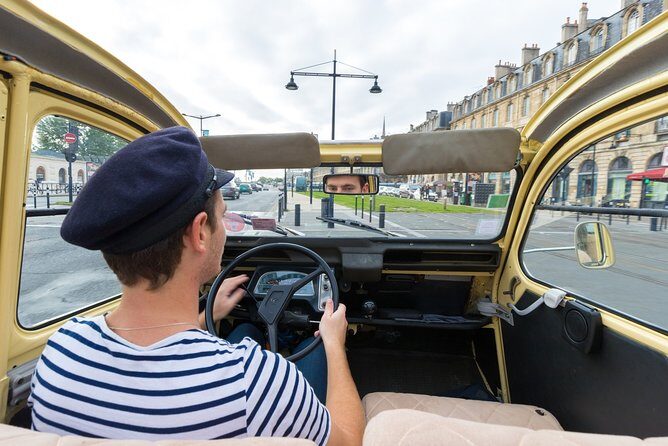
This isn’t a slow, stop-every-20-minutes tour. It’s a guided overview designed to give you the lay of the land quickly. The 2CV does a lot of work here: it’s low, open, and old-school, so you get better sightlines at street corners and along the river routes than you do from a cramped van.
And because it’s private, you don’t need to tolerate a rigid script. Your guide can slow down when you ask something, speed up when you’re ready to move on, and tailor explanations to what you find interesting—whether that’s street names, building styles, or why certain districts developed the way they did.
If you’re the type who wants to return later and explore on your own, this format helps. You’ll leave with a “map in your head,” not just a list of places you visited.
Other private guided tours in Bordeaux

Price and Timing: What $107.24 per person really buys
At $107.24 per person for about 1 hour 30 minutes, you’re paying for three things: the guide, the car, and the time savings. The value is strongest if you’re trying to cover Bordeaux efficiently on a first day.
Bordeaux can be a little tricky on foot because the city spreads out, and the river crossings change how neighborhoods feel. A car tour means you can reach both sides and major landmarks in one sweep, including the new vertical lift bridge and the oldest bridge—views you’d work hard to string together with public transport.
Also, with pickup offered (hotel, apartment, or cruise ship in Bordeaux), you remove one of the biggest friction points of sightseeing: figuring out meeting points, timing trams, and dragging luggage around.
One more practical point: this tour is commonly booked around 53 days in advance, which usually signals steady demand. If your travel dates are set, I’d lock it in early rather than gambling on last-minute availability.
The 90-minute route: squares, districts, bridges, and doors
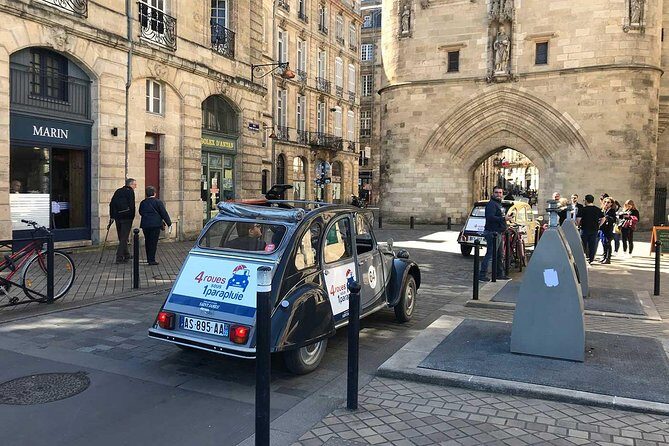
The itinerary is built like a guided drive tour: you’ll roll through the city, pause at key stops, then connect the dots with short explanations. Here’s what that feels like in real time, using the kinds of sights you’ll see.
1) A giant Bordeaux square and the famous water mirror
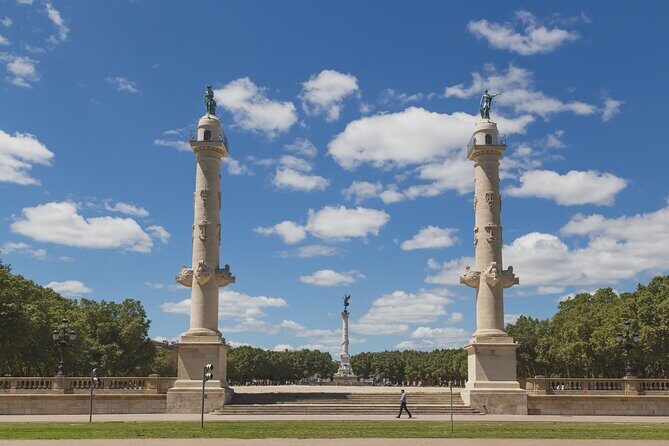
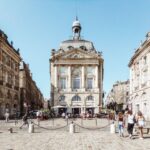
You start at one of the city’s biggest squares, the kind of place that instantly tells you Bordeaux is a grand, planned city—not just a cluster of old streets. From there you’ll connect to the area people associate with the water mirror effect. Even if weather changes the look, the location matters: it’s a central stage for the city’s more theatrical, “public space” side.
Look for how the façades line up around the square. Your guide will typically point out the visual rhythm—stone, angles, and the way the square frames views.
2) Sainte-Croix vibes and an emblematic church district
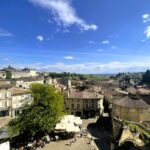
You’ll spend time in the Quartier Sainte-Croix area, including an emblematic church and district stop. This is where Bordeaux’s older neighborhoods start to feel human-sized: tighter streets, more character, and a sense of older daily life.
This kind of stop is useful because it gives you context. Without it, the big monuments can feel like isolated “photo stops.” With it, they start to make sense as part of a neighborhood.
Other Citroën 2CV and classic car tours in Bordeaux
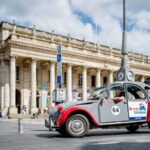
3) Chartrons and the Rue Notre-Dame antique scene
Next comes a drive along the Notre Dame street in the Chartrons district, where antique dealers line up along the street. Even if you don’t plan to shop, it’s worth seeing the area just for the atmosphere—more local and niche than tourist-only zones.
This is also a good moment to ask your guide something practical: where locals actually go for browsing, or what the area is like on market days. The car gives you the ability to ask, then immediately reposition.
4) The modern wine museum: Cité du Vin
Then you hit the big contrast: the modern museum dedicated to wine—Cité du Vin. In a short tour, this stop matters because it connects Bordeaux’s identity to the present day. Bordeaux isn’t only old architecture; it’s an active wine center with modern interpretation.
Even if you don’t go deep inside, you’ll get the “why it’s here” explanation: what it represents and how wine culture shapes the city’s modern branding.
5) Two bridge styles: new vertical lift and the oldest crossing
You’ll cross the new vertical lift bridge of Bordeaux, then later see the oldest bridge. These two stops do more than offer views. They teach you how Bordeaux changed its thinking about movement and expansion over time.
Watch how the river edges and surrounding streets differ near each bridge. From the car, the city’s layout becomes obvious. That’s hard to pick up from walking alone.
6) Medieval doors, a Roman church, and “how to read” façades
Your route includes several “door” moments—beautiful and medieval gates/entries—plus a Roman church example. These are the kinds of stops that can feel decorative if you only look for photos.
The guide helps you read them. For example, the tour highlights Mascarons, which are those sculpted faces used on façades. Once you notice what you’re looking at, you’ll start spotting them across town even after the tour ends.
A Roman church stop also gives you a baseline. Bordeaux has layers, and your guide can point out what feels different between older stone styles and later building eras.
7) Place-level landmarks: church-and-spire square, cathedral, and city hall
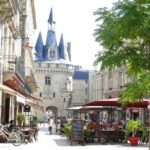
Next you’ll reach a famous square featuring a church and a spire, then a major square where you’ll see the cathedral and the city hall together. This section is the “official Bordeaux” part of the route—the places that communicate power, governance, and religious history.
In this part of the tour, I like the way the drive helps. You see how the city opens up around civic spaces. Then, when you later return for a longer walk, you’ll understand why the streets funnel toward those squares.
8) The XVII/XVIII-era showstopper: the Grand Théâtre area
Finally, you’ll reach the “showcase” end: the tour includes one of the most beautiful monuments from the XVIII century, and that points you toward the Grand Théâtre zone. It’s the kind of finish that makes the whole drive feel worthwhile: you end in a place that looks designed for grand public life.
If you like architecture, this final stop is where the city clicks. You’ve seen the old doors, the Roman stone, the modern wine statement, and the bridges. Now you get a monumental “centerpiece.”
Guide energy matters: what makes the tour feel worth it
The difference between a good tour and a great one is how the guide turns scenery into meaning. The strong pattern here is friendly, thorough guidance and a clear ability to explain architecture and history without drowning you in dates.
Guides you may encounter include names like Tom, Sam, Anaïs, Luc, Alice, Paul, Nicholas, and Lucio. The common thread is the storytelling: how Bordeaux changed, why districts look the way they do, and what details are worth noticing even when you’re in a moving car.
If your guide is on a roll, you’ll also get practical city sense—like how neighborhoods connect across the river or what areas are most worth returning to. In at least one case, the guide also helped with day-to-day ideas like where to shop and how to use the tram system, which is the kind of real-world help that pays off later.
Tip: If you only ask one question during the tour, ask this—Where should I walk for 60 minutes after this, to see the city the way it feels lived-in? You’ll get a better answer than any generic list.
Comfort and photo tips: when to enjoy the open roof
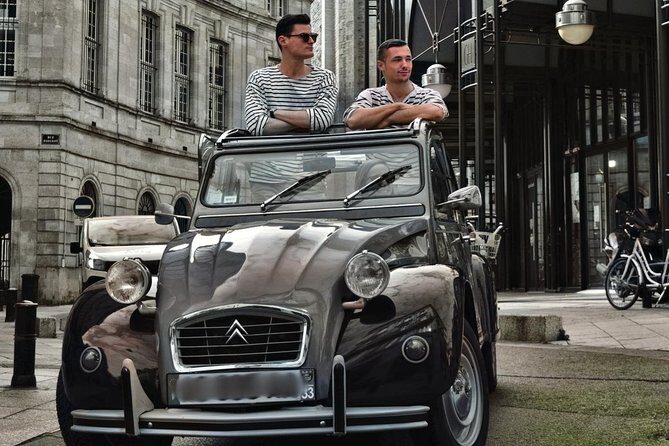
Because this is a soft-top 2CV, you’ll want to time your photos and comfort for weather. Many people love the open experience when conditions are right. If it’s warm and calm, the ride feels much more like street-level cruising.
Plan for this reality:
- Bring a light layer even in decent weather. Cars and rivers can shift temperatures fast.
- If the roof is open, you’ll get better shots—but also more wind. Tie back long hair.
- Use your pauses strategically. The tour is short, so step out when your guide signals a photo moment rather than wandering around.
This ride also has an unexpected social bonus: the car attracts attention from locals. It’s not a reason to book, but it tends to make the experience feel memorable on a human level.
When the route feels perfect, and when it might not
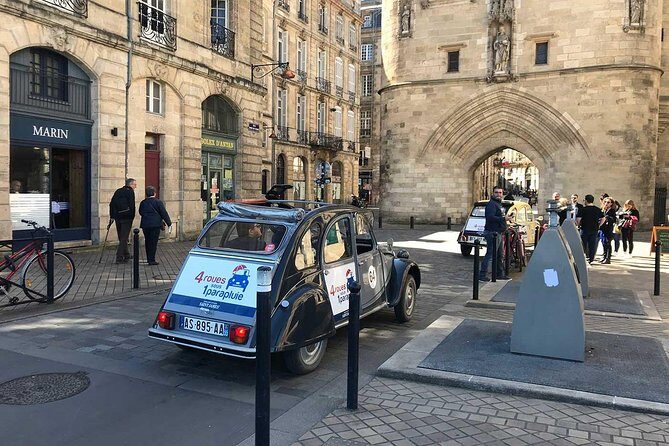
This tour is ideal if you want:
- A first-day overview so you know where to go next
- A way to see major sights without big walking distances
- A mix of old and new Bordeaux, especially with Cité du Vin and the Grand Théâtre included
It may feel less ideal if:
- You already know Bordeaux well and want deeper museum time
- You’re expecting a long, heavily paced route where every stop is a major “must-see” interior
- You’re very sensitive to timing and delays, especially for cruise-ship schedules. One late pickup case (due to cruise pickup miscommunication) trimmed the planned tour duration.
Still, the vehicle and guide quality tends to be the big win. When things run smoothly, it’s a fun way to get oriented fast and learn what to look for later.
Should you book this private Bordeaux 2CV city tour?
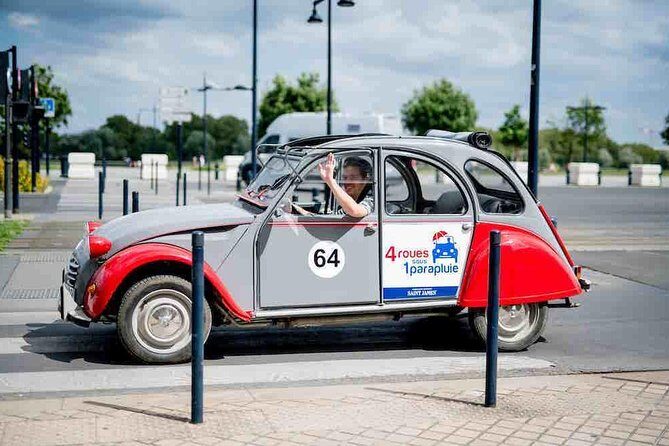
Book it if you want a smart introduction to Bordeaux that combines district flavor, major landmarks, and practical sightseeing in a short window. The $107.24 price makes more sense when you factor in the private guide time plus hotel or pickup convenience, and when you’re using the tour to plan your next day.
I’d skip it or consider a different format if you’re the type who needs long stops, museum entry time, or a very structured “every stop is a headline” itinerary. Also, if you’re on a tight cruise schedule, choose this with extra care and confirm pickup details clearly.
If you match the vibe—short on time, curious about architecture, and ready to learn why Bordeaux looks the way it does—this is a genuinely enjoyable, good-value way to start.
FAQ
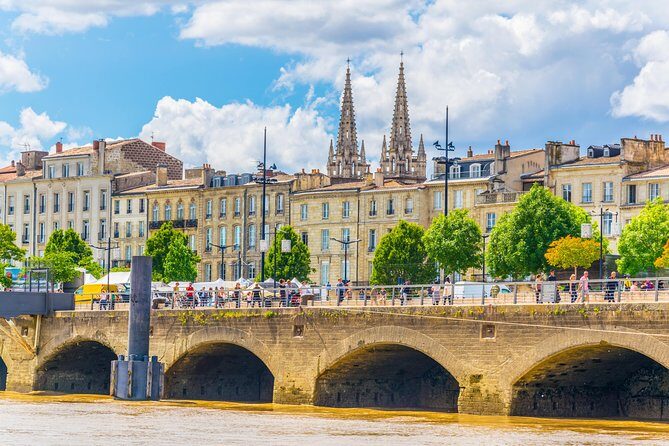
How long is the Private City Tour of Bordeaux in a Citroën 2CV?
It runs for about 1 hour 30 minutes.
What is the price per person?
The price is $107.24 per person.
Is pickup included?
Pickup is offered. You can depart from your cruise ship, hotel, or apartment located in Bordeaux, if you specify this when you book.
Is this a private tour?
Yes. It’s private, and only your group will participate.
What language is the tour in?
The tour is offered in English.
Is there free cancellation?
Yes, you can cancel for free up to 24 hours in advance for a full refund.
If you tell me your travel dates and whether you’re starting from a hotel, apartment, or cruise dock, I can help you plan the best way to pair this with walking time afterward.