REVIEW · BORDEAUX
Bordeaux: City Highlights Guided Walking Tour
Book on GetYourGuide →Operated by HandMedinaCo Tours · Bookable on GetYourGuide
Two hours, and Bordeaux makes sense fast. This English-only walk starts at the Jacques Chaban Delmas statue and, with a guide like Tammy, threads you through Saint André Cathedral and Place de la Bourse.
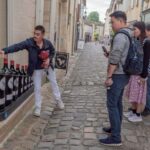
I like the storytelling style: it turns landmarks into something you can explain to a friend. I also love the practical side, too, since guides such as Caz and Camila tend to share useful tips at the end for where to eat and drink.
Do take one caution seriously: it’s a walking route and it’s listed as not suitable for people with mobility impairments, so you should expect a real walk (plus the church-and-gate type terrain).
In This Review
- Quick highlights to know before you book
- Starting at Place Pey-Berland by Chaban Delmas
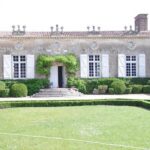
- Hotel de Ville de Bordeaux: the civic anchor
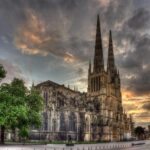
- Cathedral Saint André: how the guide helps you read the building
- Grand Théâtre de Bordeaux and the city’s main streets
- Porte Cailhau: the medieval gate moment
- Saint-Pierre Church: 12th-century perspective
- Place de la Bourse and Miroir d’eau: the “photo-worthy pause” stop
- Tour Pey-Berland and Place Camille Jullian: viewpoints and timing
- Monument aux Girondins and the stories behind Bordeaux
- The walk pace, shade, and what to wear
- Price and value: why $4.12 feels almost too good
- Why it’s a great first-day plan
- Should you book this Bordeaux city highlights walking tour?
- FAQ
- How long is the Bordeaux city highlights guided walking tour?
- Is the tour offered in English?
- Where do I meet the guide?
- What are some of the main places the tour visits?
- Is it wheelchair accessible?
- What should I bring or wear?
Quick highlights to know before you book
- English guide, English only, so you won’t be guessing during key explanations
- Start at Place Pay Berland by the Chaban Delmas statue, spot the guide with a red umbrella
- Hit the big names fast, from Cathedral Saint André to Grand Théâtre and Place de la Bourse
- Medieval-to-modern mix, with Porte Cailhau and Saint-Pierre Church in the mix
- Guides bring context, including political stories like the Monument aux Girondins and even tough WWII-era topics when relevant
Starting at Place Pey-Berland by Chaban Delmas
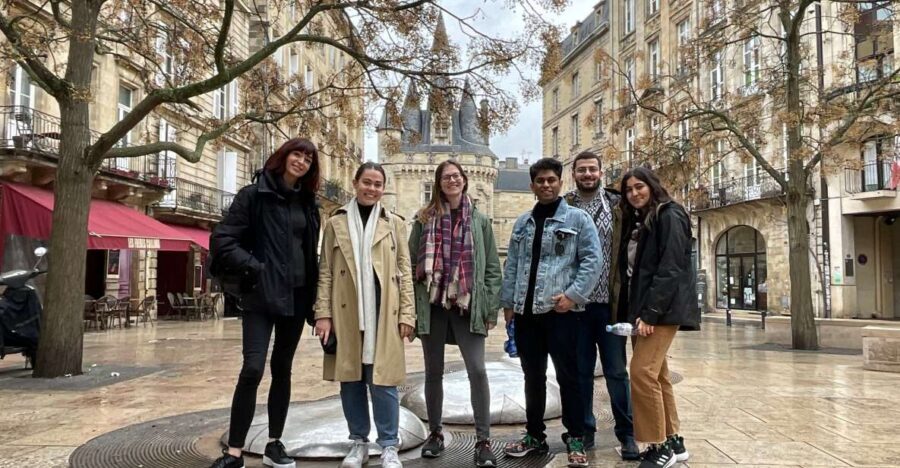
If you land in Bordeaux with that feeling of being slightly lost, this tour is a smart first move. It begins at the statue of Jacques Chaban Delmas in Place Pay Berland, and your guide holds a red umbrella, which makes meeting up quick even if you’re still orienting yourself.
From there, the tour uses the city’s layout like a map. You’re not just checking off buildings. You’re learning how Bordeaux pieces fit together: civic space, major churches, grand public squares, and the streets that connect it all. That matters because Bordeaux is the kind of city where the details help you understand the whole picture, and walking at a guided pace gets you oriented in time to enjoy the rest of your days.
Also, the guide format is simple and effective: a real, live person speaking English, answering questions along the way. A lot of guides in Bordeaux seem eager to teach, and you get that energy here—people have singled out the enthusiasm and passion in particular.
Other Bordeaux walking tours in Bordeaux

Hotel de Ville de Bordeaux: the civic anchor
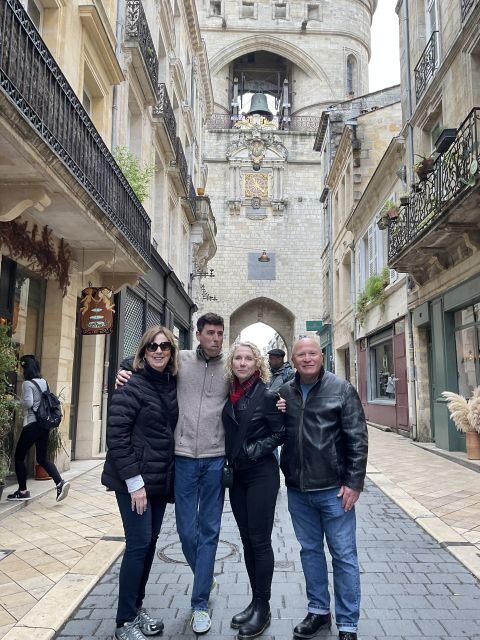
One of the best tricks of a short highlights tour is choosing the right “anchor stop.” Hotel de Ville de Bordeaux acts like that. It’s early in the route, and it gives you a sense of what the city treats as important public ground.
In a two-hour walk, you want stops that don’t just look pretty from the outside. This one helps you connect what you’re seeing later. Think of it as the warm-up: the guide sets the tone for how they’ll explain Bordeaux—where power lived, how public space functions, and why some landmarks matter beyond their photo value.
The pacing here is also practical. You get a guided visit and sightseeing time (about 10 minutes at this stage), which is exactly what you want early on: enough to get oriented, not so much that you’re rushing to catch up with the rest of the group.
Cathedral Saint André: how the guide helps you read the building
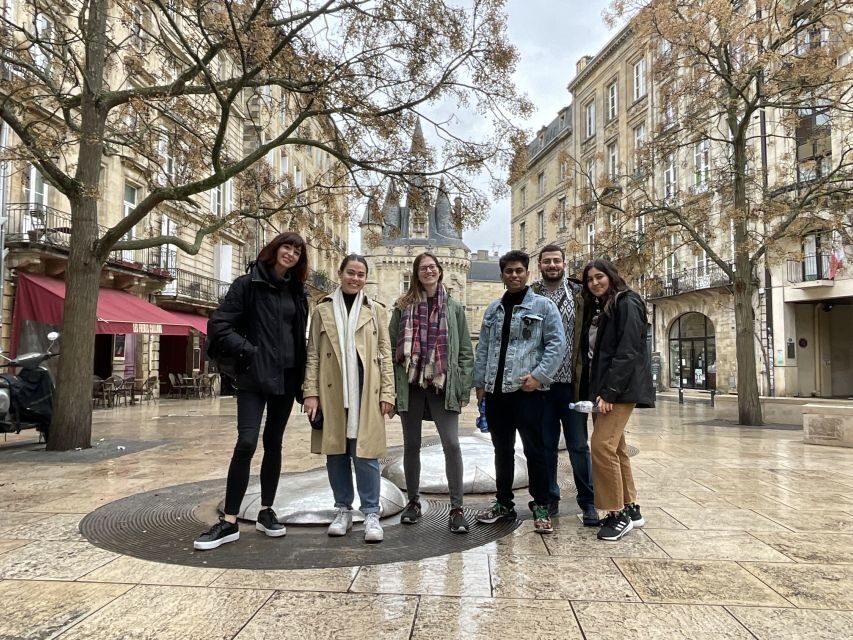
Cathedral Saint André is one of Bordeaux’s headline sights, and the tour uses it for more than a quick glance. The guide brings you close enough to really notice the parts you’d otherwise ignore, then explains the stories behind what you’re looking at.
What I like about this stop is the “why” factor. A cathedral can feel like it’s just stone from a distance. With a guide, it becomes a landmark with layers—what it meant, how it sits in the city’s flow, and how people relate to it today. It also sets you up for the rest of the route, because you start noticing how church, civic space, and public squares connect.
English-language delivery is a big deal here. If you don’t read French quickly, you still get the meaning of the place. Reviews also describe the guides as lively and energetic, which keeps a long explanation from turning into a lecture.
Grand Théâtre de Bordeaux and the city’s main streets
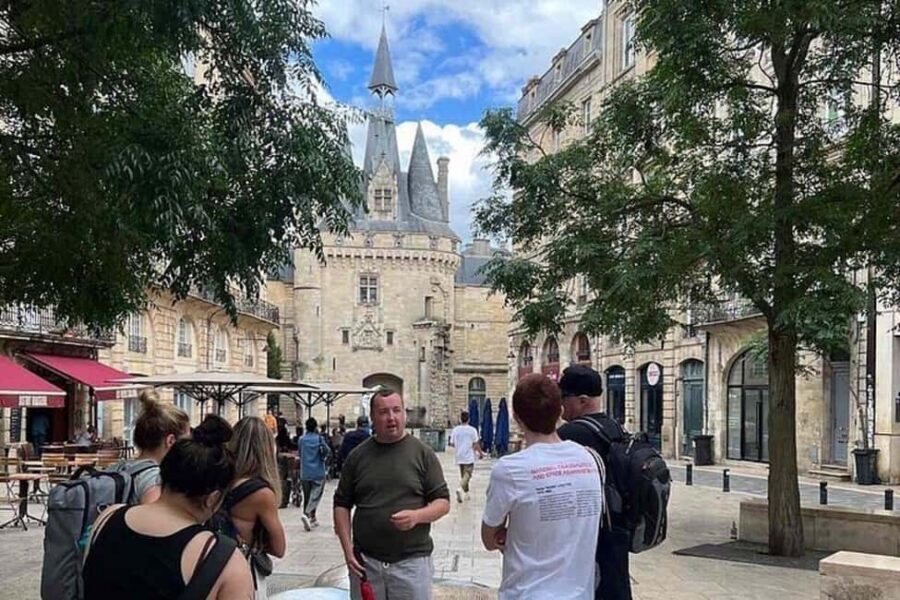
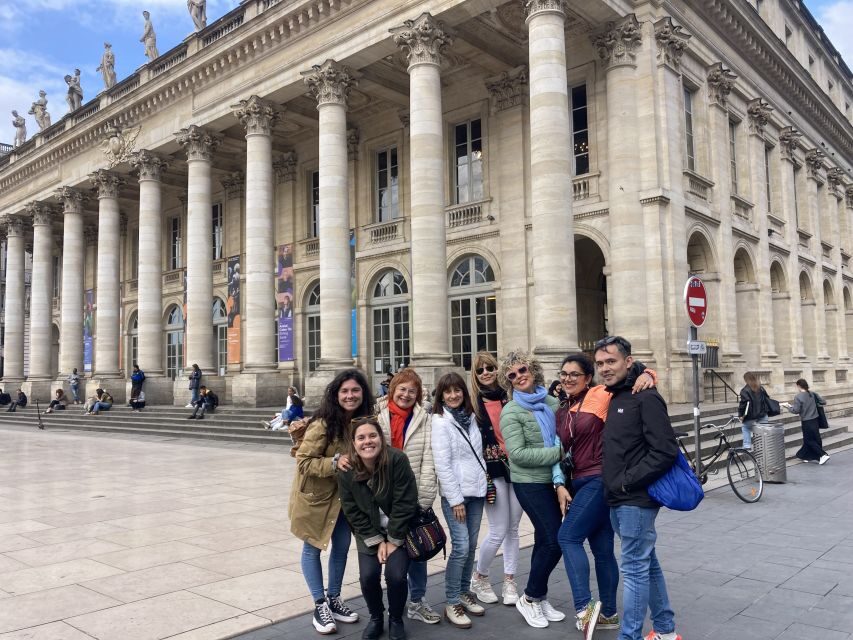
Next comes the Grand Théâtre de Bordeaux, another big-name building you’ll want to see in person if you care about architecture and city life. The tour doesn’t treat this as a “pose and go” stop. It’s used to talk about scale and place—how Bordeaux put its money and ambition into public buildings.
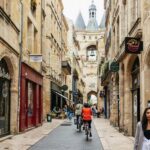
Then the walk keeps you moving through the areas that feel like the everyday city. One named highlight in the route description is Rue Saint Catherine, which is exactly the kind of street that helps the tour feel real. It’s where you understand that Bordeaux isn’t only monuments on postcards. It’s people walking, shopping, pausing, and going about their day.
This is also where a guided format helps you avoid that common two-hour problem: you spend the whole time staring at buildings but miss the links between them. Here, the route keeps nudging you to connect dots as you go.
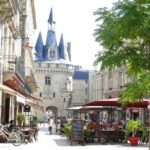
Porte Cailhau: the medieval gate moment
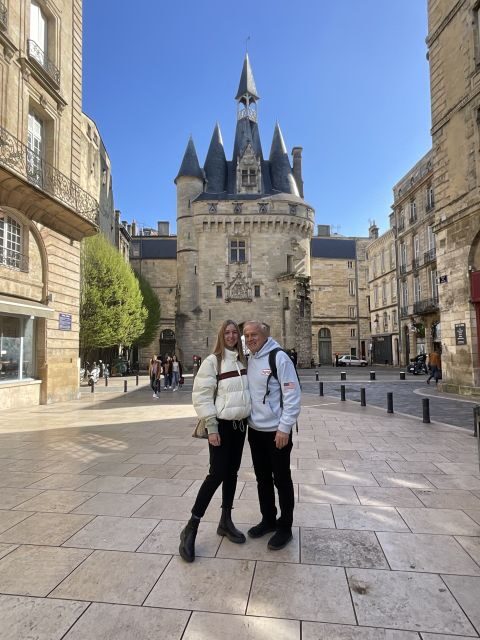
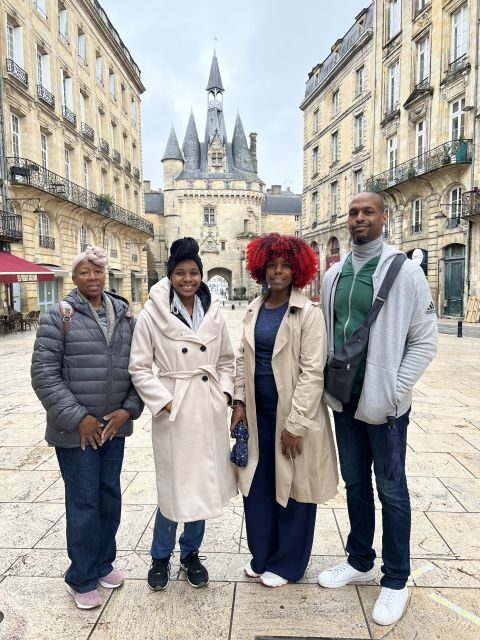
If you like history that you can physically stand next to, Porte Cailhau is a great mid-tour reset. A medieval gate hits differently when you see it as part of a living street, not as an isolated museum object.
On this walk, the guide uses stops like Porte Cailhau to give you a sense of time passing in one city space. You’re reminded that Bordeaux has changed, but the city still carries older lines you can read if someone points them out.
This is also a good stop for photos. More importantly, it’s a good stop for context. You’ll get that sense of the city evolving—then you’ll notice it again at later stops.
Other walking tours we've reviewed in Bordeaux
Saint-Pierre Church: 12th-century perspective
Saint-Pierre Church (the tour notes it dates back to the 12th century) is where the tour’s historical streak gets its strongest “hold on, that’s old” moment. You’re not just seeing a church. You’re stepping into a site the guide can frame as part of the city’s longer timeline.
In a short tour, you often don’t get time to take your time inside. Still, the guide’s approach can make even a brief visit feel meaningful: what to look for, why the church matters to Bordeaux’s identity, and how it connects to surrounding streets and squares.
One practical note: wear comfortable shoes. Church stops and gate areas can come with uneven ground, and you’ll want your feet to stay happy through the whole route.
Place de la Bourse and Miroir d’eau: the “photo-worthy pause” stop
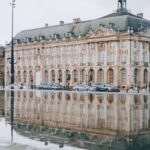
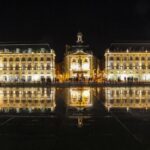
Place de la Bourse is one of those places where the building shapes the atmosphere. The tour brings you here as a key highlight, and the payoff is that it feels like a proper Bordeaux square—grand, classic, and designed for people to gather.
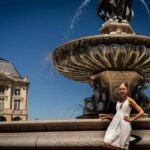
Then comes Miroir d’eau (the tour explicitly includes it). Even if you only spend a short time there, it’s the kind of stop that breaks up the walk with a calmer moment. It also helps you see Bordeaux as more than architecture. You’re getting the city’s visual rhythm—big facades, open space, and a moment to slow down.
This is one reason I like tours like this early in a visit. You get your “wow” photos without needing to spend half a day doing it on your own.
Tour Pey-Berland and Place Camille Jullian: viewpoints and timing
The tour continues to Tour Pey-Berland and Place Camille Jullian. These stops help you keep the walking loop coherent—moving from major landmarks to more human-scale spaces where you can feel the city’s character.
Tour Pey-Berland is included as a guided sightseeing stop, so you’re not just passing by. You get an explanation tied to what you’re seeing. Place Camille Jullian helps with the “in-between” feeling that makes the walk enjoyable rather than exhausting.
These are the moments that turn the tour from a list of famous sights into an actual experience. You start recognizing where you are in Bordeaux, and that makes it easier to plan the rest of your trip without relying on Google Maps every five minutes.
Monument aux Girondins and the stories behind Bordeaux
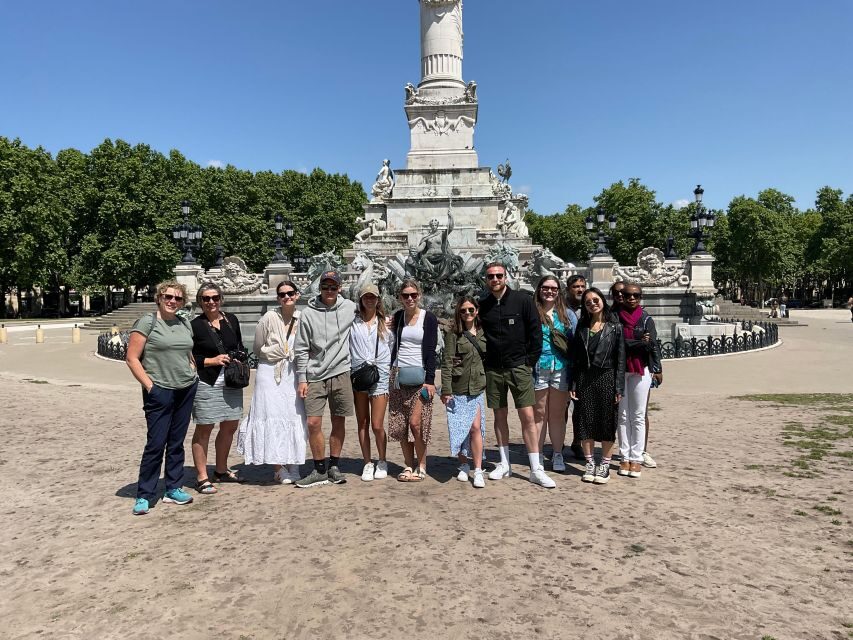
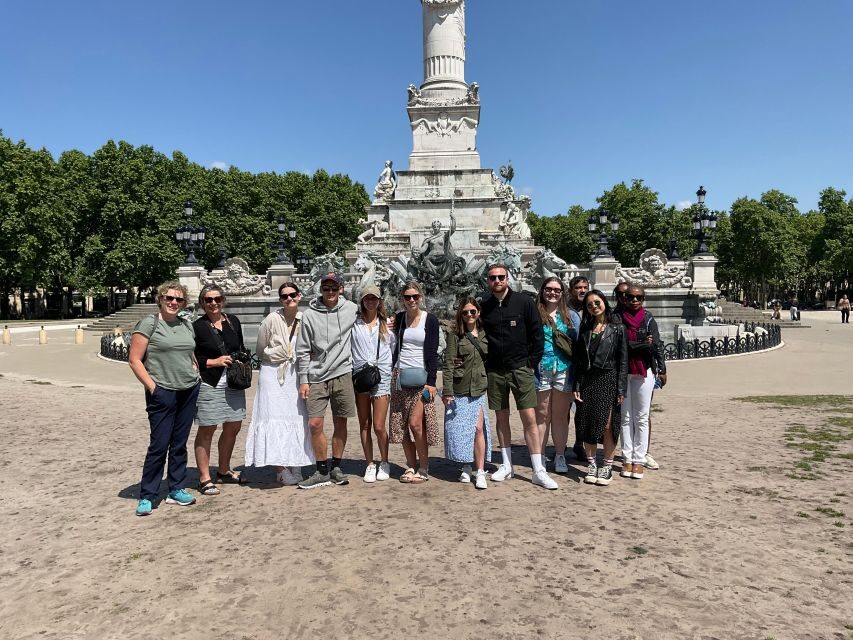
Not every highlights walk is willing to handle the heavier parts of a city’s story. Here, guides may include political history, including the Monument aux Girondins. The tour description also specifically points to political history as part of what you’ll learn.
That approach is useful. It prevents the tour from being only about buildings and dates. Bordeaux is a city with a past that shaped its identity, and a guide who can explain those layers helps you interpret what you see later when you’re on your own.
One review also mentioned that a guide didn’t shy away from difficult WWII-era topics, including the fate of Jews in relation to the war and French collaboration. That tells me the best version of this tour isn’t only “pretty sights.” It’s honest, and it’s willing to answer questions.
The walk pace, shade, and what to wear
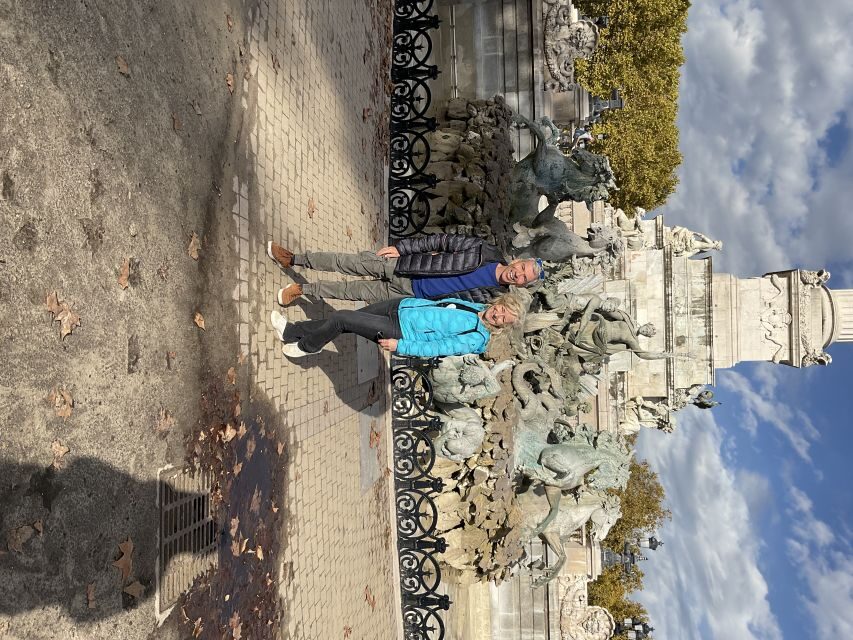
This is a two-hour guided walk, so you should treat it like a real stroll with stops—not a slow sightseeing crawl. You’ll cover a lot of ground, and the payoff is you end the tour with a strong sense of the city’s major landmarks.
Bring comfortable shoes and dress for the weather. In warm conditions, some guides have been noted for managing the experience to keep the group in shade when possible, which is the kind of detail that matters more than people expect.
Also, remember the terrain includes churches and gates, which can mean steps and uneven surfaces. Since it’s listed as not suitable for people with mobility impairments, don’t assume it’s a low-effort flat walk.
Price and value: why $4.12 feels almost too good
At $4.12 per person, this tour is priced in a way that screams value—especially because it includes a live English speaking guide and a route that hits major Bordeaux landmarks like Cathedral Saint André and Place de la Bourse.
Now, be realistic: it’s still a short tour. Two hours means you’re getting a highlights intro, not a deep, day-long explanation of wine culture or detailed museum time. If you’re looking for something that feels like a full history course, you might want to pair this with a longer visit somewhere later.
But as a first orientation tool, it’s hard to beat. You’ll learn enough to navigate Bordeaux with more confidence, and you’ll come away with ideas for what to revisit afterward.
Why it’s a great first-day plan
If you’re the kind of traveler who wants their second day to run smoothly, this is a smart “first day” move. The route covers the major anchors—cathedral, theatre, medieval gate, civic square, and the water feature—so your brain connects what those places have in common.
Guides also commonly end with useful suggestions. Several reviews mention recommendations for where to eat and drink, with one specific coffee stop named: Cafe Phia. That kind of local guidance isn’t just nice. It saves you time when you’re hungry and tired.
And because you’ll be in English only, you’re free to focus on the city rather than translating. That alone makes a big difference on short trips.
Should you book this Bordeaux city highlights walking tour?
Book it if you want a fast, organized introduction to Bordeaux that balances famous landmarks with real explanations in English. It’s especially worth it when you’re short on time and want a route that covers the city’s key visual anchors: Saint André Cathedral, Place de la Bourse, Porte Cailhau, and Saint-Pierre Church.
Skip it (or double-check with the provider) if walking distance or steps are an issue for you, since it’s listed as not suitable for people with mobility impairments. Also, if you already know Bordeaux very well and you’re chasing a niche theme, this may feel like a broad highlights sampler rather than the deep cut.
FAQ
How long is the Bordeaux city highlights guided walking tour?
It lasts 2 hours.
Is the tour offered in English?
Yes. The tour is English only, with a live English speaking guide.
Where do I meet the guide?
Meet next to the Statue of Jacques Chaban Delmas in Place Pay Berland. The guide will be holding a red umbrella.
What are some of the main places the tour visits?
The tour includes stops such as Hotel de Ville de Bordeaux, Cathedral Saint André, Grand Théâtre de Bordeaux, Porte Cailhau, Place de la Bourse, Tour Pey-Berland, Miroir d’eau, Place Camille Jullian, and Saint-Pierre Church, finishing at Place de la Comédie.
Is it wheelchair accessible?
The activity is listed as wheelchair accessible, but it is also listed as not suitable for people with mobility impairments. If you have accessibility needs, it’s worth confirming details with the provider before you go.
What should I bring or wear?
Wear comfortable shoes and dress in comfortable clothes that match the weather.