REVIEW · BORDEAUX
Bordeaux: Street Art Guided Tour
Book on GetYourGuide →Operated by My Urban Experience · Bookable on GetYourGuide
Street art on Bordeaux’s portside is a treat. This guided walk connects the Garonne quays to the Chartrons neighborhood, so the art isn’t floating in space. It sits on the same streets that once supported Bordeaux’s wine trade.
I really like how the tour works as both an art lesson and a neighborhood intro. In just 1.5 hours, you’re pointed toward major street artists like Clet, A-MO, Mr Poulet, and Alber, with the guide adding the background that helps the walls make sense. One consideration: there’s a small risk of a last-minute guide no-show, so I’d plan to arrive early and keep an eye on any messages you receive.
In This Review
- Key points
- Where you start: getting oriented at Tram Les Chartrons
- Chartrons in 17th-century context: why the walls turned artistic
- Along the route: quays, antique streets, and old storehouses
- The artists you’ll actually learn to spot: Clet, A-MO, Mr Poulet, Alber
- A French-speaking guide who makes the neighborhood click
- How long it really takes: fitting 1.5 hours into Bordeaux plans
- Price and value: why $18 is a fair deal for guided street art
- When things go wrong: timing, heat, and the no-show risk
- Who should book this street art walk
- Should you book it?
- FAQ
- How long is the Bordeaux street art guided tour?
- Where do I meet the guide?
- What language is the tour guide?
- How much does the tour cost?
- Is the tour family friendly?
- What should I bring?
- Is the tour wheelchair accessible?
- Can I cancel and get a refund?
Key points
- Port-to-Chartrons route: You start near the Garonne and end in the heart of the Chartrons quarter.
- Street-art artist names you’ll recognize: Clet, A-MO, Mr Poulet, Alber.
- Chartrons context matters: Learn why this area grew north of the city center and became wealthy from the 17th century onward.
- A French-speaking, family-friendly pace: Easy to follow even if you’re not a street-art expert.
- Made for photos: Bring your camera, because you’ll want proof of what you spot.
- Wheelchair accessible: The walk is designed to be usable for people with mobility needs.
Where you start: getting oriented at Tram Les Chartrons
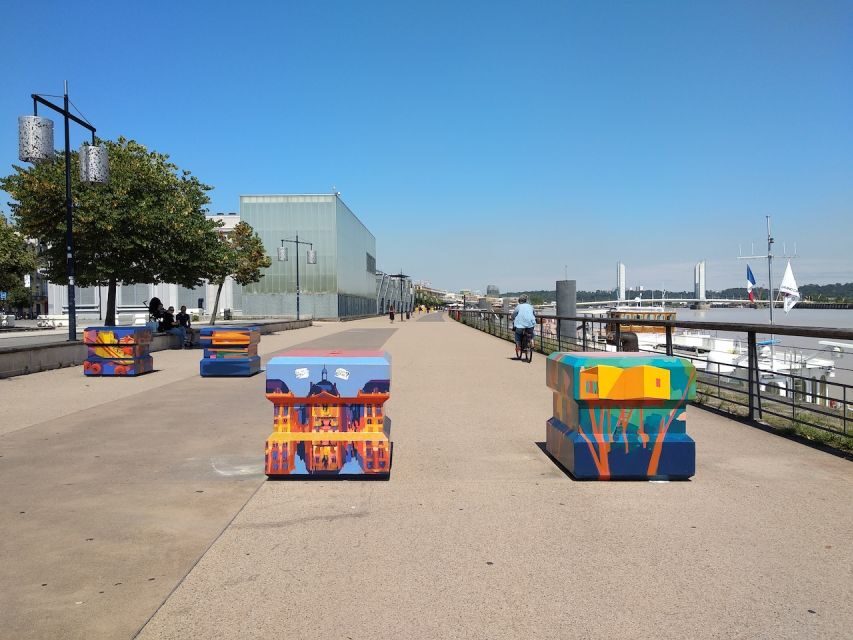
This tour is built around a simple idea: start by the water, then walk into the neighborhood where the walls tell stories. You meet at the Tram B stop named Les Chartrons, which is helpful because it anchors you in the area right away. It also means you’re not trying to navigate Bordeaux’s streets before the tour even begins.
From there, the route takes you along a line you can understand quickly—the quays of the Garonne toward the Chartrons core. That matters because Bordeaux can feel like a patchwork of places, especially if you’re hopping between monuments. This walk gives you one clear thread: port life and wine commerce, then the later layers of art and everyday street texture.
Practical tip: wear shoes you trust on uneven sidewalks. The tour is only 1.5 hours, but you’re on foot the whole time, and the Chartrons area is all about streets, not shortcuts.
Other guided tours in Bordeaux



Chartrons in 17th-century context: why the walls turned artistic
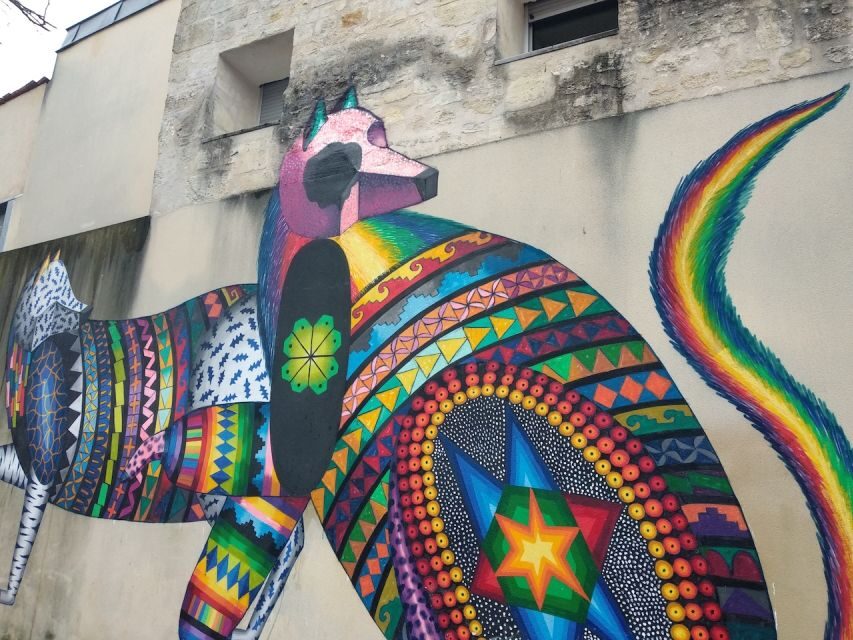
Chartrons didn’t develop overnight. The area grew north of Bordeaux’s city center starting in the 17th century, when it became known as a faubourg that—at first—felt somewhat separate from the city proper. Over time, it gained wealth and attracted different kinds of visitors, which is a big reason it became fertile ground for public art.
Street art makes more sense when you know the underlying neighborhood logic. In the Chartrons, you’re looking at surfaces that have long been used for industry and commerce—especially because the district sat close to the port and its logistics. The tour’s route passes places tied to the wine economy, including old wine storehouses, so you can see how the function of the area shifted over time.
That’s the key: you’re not just hunting for colorful pieces. You’re seeing why walls in Chartrons would naturally invite bold expression. When a neighborhood has lots of foot traffic, constant change, and a history tied to trade, the street becomes a place people treat like a canvas.
Along the route: quays, antique streets, and old storehouses
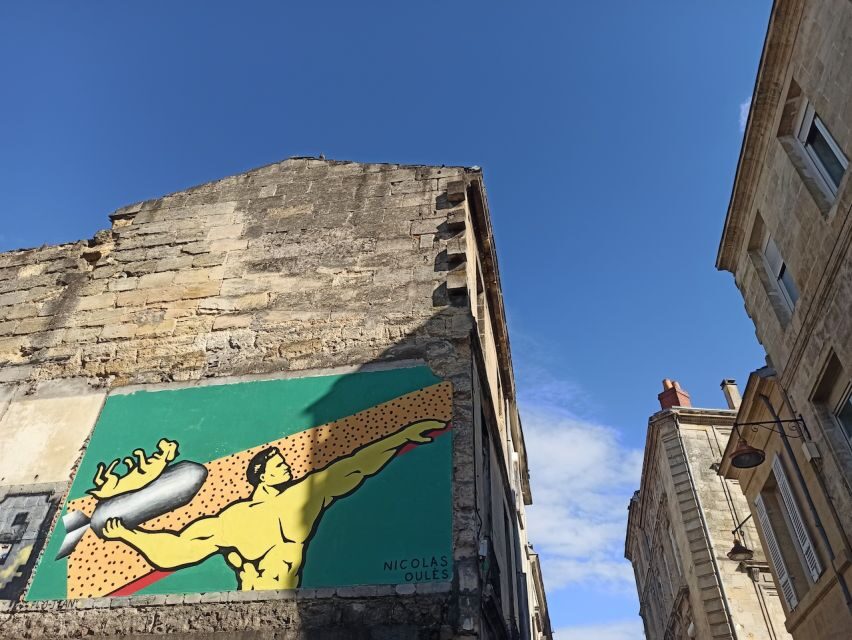
As you walk, you move through a sequence that’s easy to track. You begin at the Garonne quays, then head toward the Chartrons district, where the tour focuses on the junction between commerce and art.
One of the most interesting parts is the way the tour threads practical sights into the story. You pass by old structures linked to the wine trade, including wine storehouses, then you continue toward Rue Notre Dame, known in this area for its antique dealers. That antique-street detail matters because it reinforces the Chartrons vibe: history isn’t locked behind museum glass. It’s in shopfronts, street corners, and—yes—painted walls.
If you like tours that make you look at streets differently afterward, this one does that. You’ll likely start noticing layers: what a building used to do, what it does now, and how artists respond to the neighborhood’s pace and character.
If it’s rainy, don’t assume the tour becomes a waste. One of the strong points that comes up in people’s experience is that the visit still works even when the weather shifts. You may have to keep your camera strap tight and your phone dry, but the walk is short enough that you don’t get stuck for hours in bad weather.
The artists you’ll actually learn to spot: Clet, A-MO, Mr Poulet, Alber
This is a street-art tour, but it’s not random graffiti spotting. The guide puts specific artists into the route, including Clet, A-MO, Mr Poulet, and Alber. Knowing names helps you move from seeing colorful surfaces to understanding what you’re looking at.
Here’s why that matters: street art often works like a conversation—between artist and neighborhood, between style and message, between the present wall and the history under it. If you only get visuals, you’ll miss half the point. With a guide, you get the context that turns a wall from decoration into a statement.
You’ll also have time to slow down and look. The whole tour is just 1.5 hours, so the goal isn’t to cover every wall in Bordeaux. It’s to cover the right ones—enough for you to get a feel for the Chartrons street-art “language,” and enough for you to return later on your own with better eyes.
Bring your camera. It’s an outdoor walk, and street art is the kind of thing you’ll want to photograph before it changes. Just don’t forget the human scale: sometimes the best pieces are up close, not just far-away shots.
A French-speaking guide who makes the neighborhood click
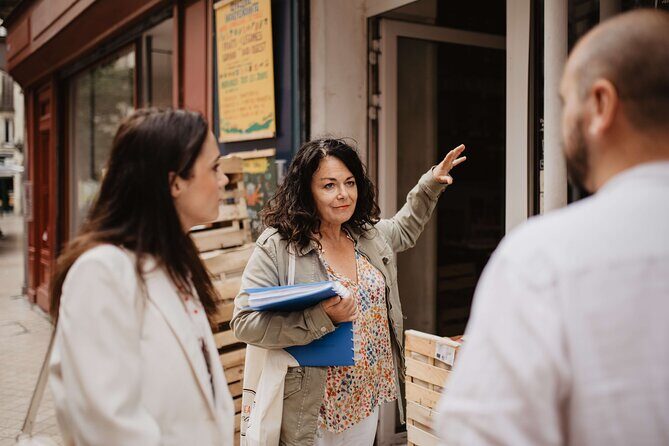
This tour is French-only, and it’s family friendly. That combination is a strong clue about the style: clear explanations, easy pacing, and storytelling aimed at helping you understand the city, not just pass through it.
What I like about this approach is that it’s less intimidating than some art tours. Street art can feel like insider territory if you’re not sure what to look for. A good guide turns uncertainty into curiosity. Instead of expecting you to decode everything yourself, they point out what to notice and connect it to the neighborhood’s story.
People also tend to mention the guide’s energy—how the explanations add spark to the walk. One experience described the tour as moving along both water and words, with color and discoveries that make the area feel like a village connected by trees and artwork. That kind of guiding helps the time feel shorter, even when you’re walking and listening for the full 1.5 hours.
Language note: if your French is basic, you’ll still get value from visuals and the guide’s structure. But if you’re traveling with someone who prefers English, this may not be the best fit.





How long it really takes: fitting 1.5 hours into Bordeaux plans
The tour runs about 1.5 hours, which is ideal for a first-time day when you don’t want to commit half of your afternoon to one activity. It’s also long enough to matter. You’re not just stopping for a quick photo op; you’re walking through the neighborhood with a story thread.
A good strategy is to treat it as a “neighborhood lens” tour. Do it earlier in your Chartrons time so you can spot things later on your own. Or do it after you’ve seen a few major Bordeaux sights, when you’re ready for something more human-scale and street-level.
Because the meeting point is Tram B at Les Chartrons, you can combine it with other Chartrons-friendly plans. Think: casual strolling, antique browsing near Rue Notre Dame, and a meal afterward—without feeling like you’ve spent your whole day locked in a schedule.
Price and value: why $18 is a fair deal for guided street art
At $18 per person, this tour sits in the budget-friendly zone for Bordeaux. But the real value comes from what’s included: a tour guide who connects the street art to the local neighborhood story.
You could walk the Chartrons on your own, sure. But you’d likely miss the point of specific artists and the why behind the walls. Street art can look “just cool” until someone explains what the work responds to: the neighborhood’s history, its movement, and its identity as a port-adjacent district with wine trade roots.
So you’re paying for interpretation and direction, not for a bus ride or a museum ticket. That’s why the price feels reasonable. You’re getting a short, focused guided experience that teaches you how to see—then you get to keep that skill as you roam.
The review score is strong—4.7 with 117 ratings—so you’re not taking a leap based on a tiny sample. Still, it’s worth remembering that even great tours can occasionally hit a rough patch.
When things go wrong: timing, heat, and the no-show risk
One downside that shows up in the real world is operational hiccups. In a reported case, the guide didn’t arrive and the group waited around 40 minutes in hot weather, without receiving a clear message beforehand. It also sounded like contacting someone was difficult in that moment.
I can’t predict whether this will happen to you, but I can give you a practical safety habit: treat the meeting time as a window you prepare for, not a guarantee. Arrive a bit early, hang near the actual meeting point, and keep your booking details handy on your phone so you can act fast if you don’t see the guide.
Also, bring water and plan for heat. Bordeaux summers can feel intense, and waiting outside is never fun. If you’re going at the warmest time of year, you’ll thank yourself for coming prepared.
Who should book this street art walk
This tour is a good match if you want:
- A fun, original way to see Chartrons, not just a list of attractions
- A quick introduction to Bordeaux through a neighborhood lens
- Street art fans who like learning artist names and meanings
- Photo lovers who want to capture street works without turning the day into a scavenger hunt
It’s also marked wheelchair accessible, which is a big advantage when so many street-level activities assume perfect mobility.
I’d be more careful if:
- You only want English-language guiding
- You prefer monument-heavy sightseeing and don’t care much about street art
- You’re highly sensitive to schedule changes (the no-show report is the only major reliability concern in the info you provided)
Should you book it?
I think you should book this Bordeaux Street Art Guided Tour if you want a short, friendly way to understand Chartrons—its wine-trade past, its present-day texture, and the street-art names that make the area feel alive. The guide-led format, the specific artist lineup (Clet, A-MO, Mr Poulet, Alber), and the fact that it’s only 1.5 hours combine into good value for $18.
My main caution is not about the art—it’s about being smart with logistics. Come early, stay near the Tram B stop at Les Chartrons, and be ready to troubleshoot if your guide is missing.
If you like walking tours that teach you how to look, this is exactly that kind of experience. You’ll leave with a different way to read the streets around you, not just a handful of photos.
FAQ
How long is the Bordeaux street art guided tour?
It lasts about 1.5 hours.
Where do I meet the guide?
You meet at the Tram B stop called Les Chartrons.
What language is the tour guide?
The live tour guide speaks French.
How much does the tour cost?
The price is $18 per person.
Is the tour family friendly?
Yes, it’s described as family friendly.
What should I bring?
Wear comfortable shoes and bring a camera.
Is the tour wheelchair accessible?
Yes, it’s listed as wheelchair accessible.
Can I cancel and get a refund?
Yes. You can cancel up to 24 hours in advance for a full refund.