REVIEW · BORDEAUX
Private tour of Bordeaux Unesco in Citroën 2cv
Book on Viator →Operated by I love my 2cv · Bookable on Viator
A 2CV tour makes UNESCO Bordeaux feel effortless. In about 1 hour 15 minutes, you get a classic Citroën 2CV ride through the city’s most famous landmarks, with quick, satisfying stops that help you connect the dots fast. It’s a fun way to see the UNESCO story without feeling stuck in a long, slow bus loop.
One thing I really like is the human touch. With Cecilia as your English-speaking hostess, the ride turns into a moving mini-lesson on Bordeaux’s history and why these places matter, and she points out details you might miss on your own. You also start right in the center, with pickup offered and the guide waiting in front of the Tourist Office at 12 Cr du 30 Juillet.
The only catch is time. In a private tour capped at about 1 hour 15 minutes, you’ll get views and orientation at each stop, but this is not a slow, sit-down museum day.
In This Review
- Key highlights you’ll get from the 2CV UNESCO route
- Why a private Citroën 2CV UNESCO tour fits Bordeaux so well
- Girondins monument and Bordeaux’s big-picture French Revolution mood
- Shopping aisles: luxury, gastronomy, and what the city values
- Grand Théâtre: elegance you can feel, even at street level
- Bordeaux’s global symbol: how trade and reputation show up in stone
- Water Mirror, Cailhau Gate, and the best UNESCO-style riverside looks
- First “stone bridge” and Garonne orientation in a single stop cycle
- Saint-André cathedral bell tower: panorama on a national monument
- Rohan Palace and Aquitaine Museum: turning stops into eras
- Between tradition and modernity: how the city mixes without losing itself
- Arboretum botanical garden: a calmer pause in the UNESCO loop
- City of Wine experience stop: architecture, rooftop, and green gardens
- Bridges and the highest lift bridge in Europe: the city still surprises
- Price and value for a private group up to 3
- Should you book the Bordeaux UNESCO 2CV private tour?
- FAQ
- How long is the Bordeaux UNESCO private tour in the 2CV?
- What is the price for this tour?
- Is this tour private?
- What language is the tour offered in?
- Where do we meet for the tour?
- Is pickup included?
- Do I need a mobile ticket?
- Are service animals allowed?
- Can I cancel for a full refund?
- Are there any rules about alcohol?
Key highlights you’ll get from the 2CV UNESCO route
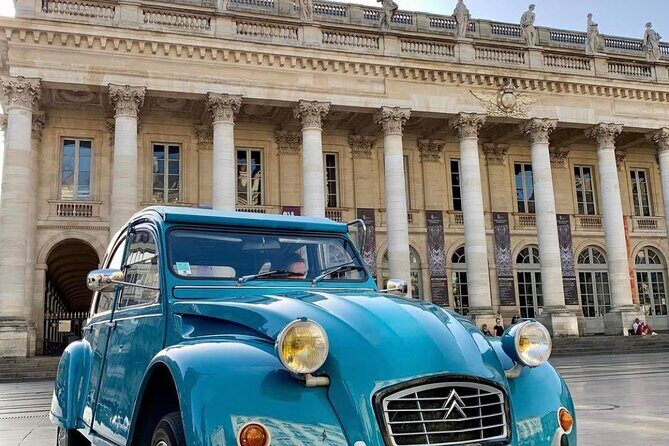
- A classic 2CV ride that feels like part of the sightseeing
- Cecilia’s on-the-road context that makes the monuments easier to read
- Bordeaux’s Revolution-to-wine storyline, from the Girondins to the City of Wine
- Riverside photo stops around the Garonne, including the Water Mirror
- A compact loop that hits a lot of UNESCO-linked landmarks in 1 hour 15 minutes
Why a private Citroën 2CV UNESCO tour fits Bordeaux so well
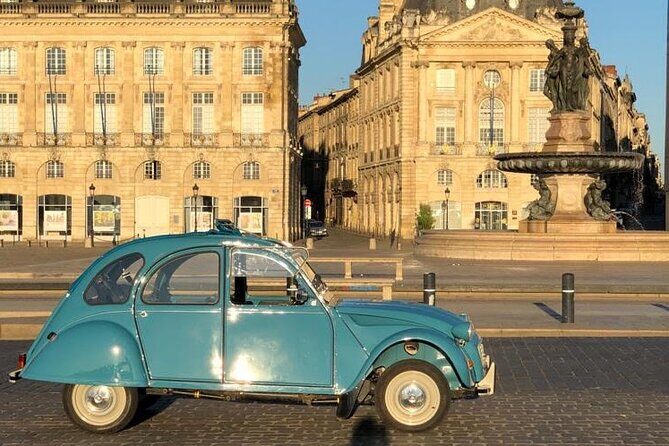
Bordeaux is a city where the big moments are spread out: theater, stone facades, gates, cathedrals, museums, bridges. A car tour helps you cover ground while still stopping for photos and short looks.
The private format matters too. With a group size up to 3, you’re not competing with strangers for attention. If you’re curious about one specific street, building, or era, you can steer the conversation. That’s also a big part of why this tour feels like a good “first pass” through the city.
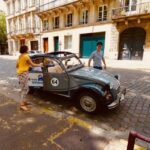
And yes, the 2CV experience is the hook. The car is small, charming, and very visible. In a city full of elegant architecture, this adds a playful contrast while still keeping the day practical.
Other private guided tours in Bordeaux
Girondins monument and Bordeaux’s big-picture French Revolution mood
The tour starts by lining you up with one of the most photographed sites in Bordeaux, tied to the French Revolution. You’ll see the monument to the Girondins, a key emblem of that turbulent era.
Why this stop works: it sets the tone early. Bordeaux isn’t just wine and stone-lined streets. It has political history, too, and this monument is an easy way to anchor the rest of the tour in a bigger story.
A quick note: because this is a driving tour with short stops, you’ll want to use the first few minutes to take wide shots. After that, your best strategy is to focus on one detail at a time—one face, one inscription, one viewpoint—then move on while the guide explains what connects it to Bordeaux’s identity.
Shopping aisles: luxury, gastronomy, and what the city values
Next up are the shopping aisles, described as a temple of luxury and gastronomy. This isn’t just a retail detour. It’s a signal of what Bordeaux wants you to notice about it: the city’s taste, craftsmanship, and the role food and wine play in daily life.
What I like here is the balance. After a heavy historical anchor (the Revolution monument), you shift toward a Bordeaux rhythm that locals care about: places where the city shows off what it’s proud of.
If you’re the type who likes to plan later meals, this stop helps you spot the flavor of the neighborhoods. Even if you don’t go shopping, it gives you a sense of where Bordeaux’s “everyday elegance” lives.
Grand Théâtre: elegance you can feel, even at street level
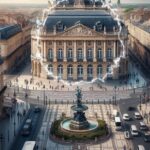
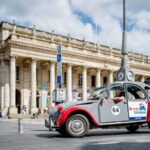
Bordeaux’s Grand Théâtre is next, and the framing is spot on: it’s an elegant monument that has shone for more than three centuries. Standing near it (even briefly) gives you that sense of continuity—how the city keeps returning to the arts, public life, and spectacle.
Here’s why the guide stop is useful. A theater building can look like just another beautiful facade. But when you get quick context on what it represents over time, you start seeing it as a landmark of identity, not just architecture.
One practical idea: when you’re outside, take one photo straight-on and then another from an angle across the street. You’ll often catch different proportions that make the building feel more “alive” than a single viewpoint.
Bordeaux’s global symbol: how trade and reputation show up in stone
The route then points you toward a place described as a sign of Bordeaux worldwide for centuries, tied to the city’s growth, trade, and reputation. This is one of those moments where you learn to read the city like a document: certain corners, facades, and spaces are repeated in postcards for a reason.
This stop is also a helpful pivot into the riverside section. Bordeaux’s status didn’t come from luck. The city’s layout and landmark locations show how connected it was to commerce and travel routes—especially along the Garonne.
Don’t rush this one. Even in a short stop, the best move is to look for the “center point” of the scene—where the skyline and the river views line up. That’s usually where the story becomes clear.
Other Citroën 2CV and classic car tours in Bordeaux
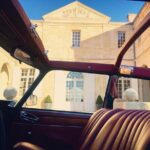
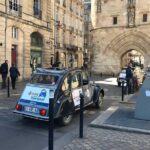
Water Mirror, Cailhau Gate, and the best UNESCO-style riverside looks
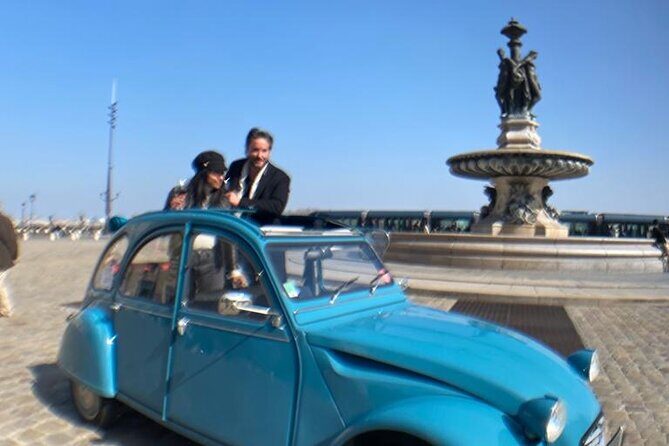
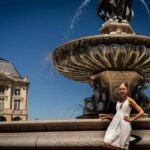
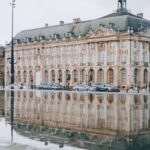
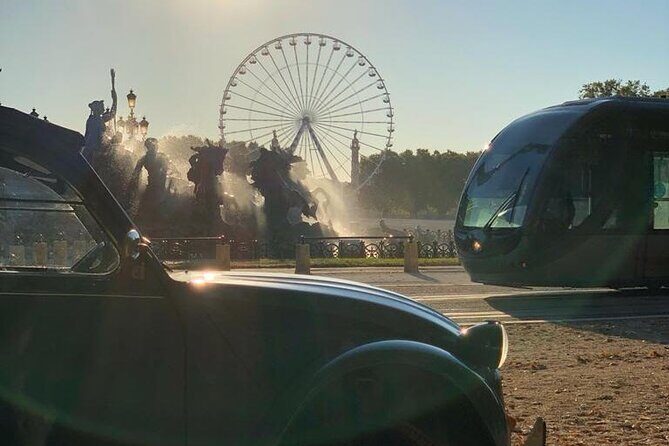
The most photographed place in Bordeaux comes next: the Water Mirror, positioned between the Garonne and an 18th-century facade. It’s also part of the contemporary World Heritage Site.
This is the kind of stop that rewards attention. The Water Mirror isn’t just a pretty idea; it’s a viewpoint that ties together river space, historic architecture, and modern heritage status. In other words, it bridges past and present in one glance.
Then you move toward Cailhau gate, built at the end of the 15th century. It was formerly connected to the walls protecting Bordeaux in the Middle Ages, and it’s one of the rare ramparts vestiges you can enter today.
Why it’s worth the detour: gates are practical history. They were built for defense, control, and movement. When you pass through or stand near one, you can almost picture the city when the walls mattered every day.
If you like photos, do two things: shoot one wide frame that includes the gate structure, and then one close-up frame that highlights the material and shape. Even on a quick stop, that close-up will make your photos feel like more than just landmarks.
First “stone bridge” and Garonne orientation in a single stop cycle
Bordeaux’s tour keeps threading the city together through water crossings. You’ll stop at the first bridge built in Bordeaux, described as the “stone bridge,” created at the instigation of Napoleon I to unify the two banks of the Garonne within the same city.
This matters for your understanding because bridges change a city’s behavior. They affect where people walk, where trade flows, and how neighborhoods connect. Even if you only spend a few minutes here, you start seeing why Bordeaux grew the way it did.
Then the route shifts to the Grosse Cloche area: the oldest belfry in France, described as the only vestige of the old city walls, with bells marking Bordeaux life since the 13th century.
This is one of the most “Bordeaux-real” stops. Bells are not just sound; they’re daily timekeeping. When you’re shown that a structure has marked life for centuries, it changes how you interpret the building’s purpose.
Saint-André cathedral bell tower: panorama on a national monument
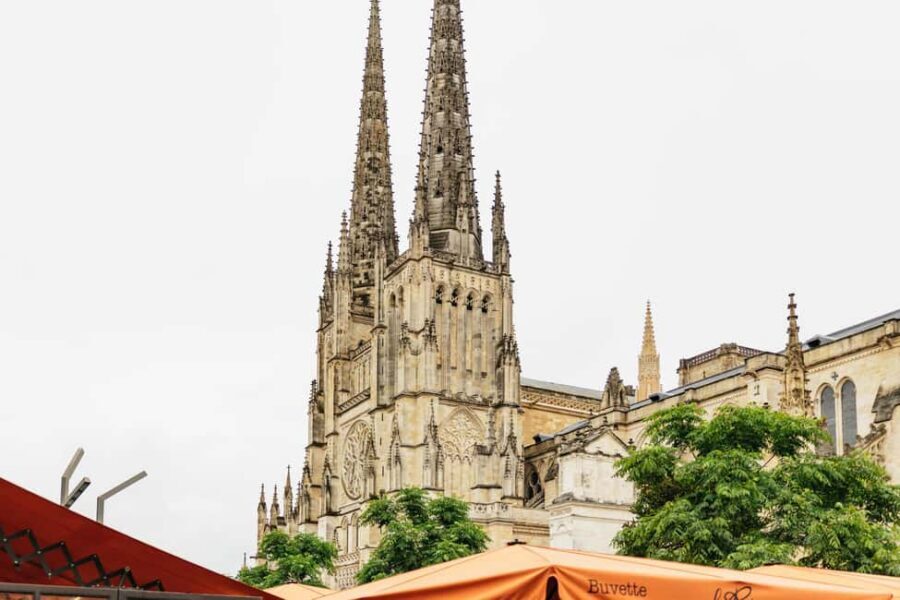
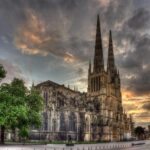
Next comes a national monument stop: the bell tower of the Saint-André cathedral, which offers a unique panorama of the city.
In practical terms, this is the moment you’ll appreciate what a short tour can still do. A panorama stop doesn’t require long ticket lines from your side if the itinerary is set up for views and quick orientation. Even if you don’t go deep into the cathedral experience itself, you’re given the “big picture” vantage point.
My advice for this part: if you’re taking photos, protect your time and focus. Get your panorama shot first, then turn to the guide for a couple of key orientation cues. Those quick orientation cues make the rest of your Bordeaux day easier when you’re walking around later.
Rohan Palace and Aquitaine Museum: turning stops into eras
The tour includes Rohan Palace, described as recalling the grandeur and power of the archbishops of Bordeaux in the 18th century. Palace stops work best when you think about power. Who built it, who lived in it, and what it was meant to communicate.
After that, you’ll reach the Aquitaine Museum, one of the largest provincial history museums. The route frames it with a wide sweep of periods: Prehistory, Antiquity, the Middle Ages, and the 18th century, plus the golden age of the city and more.
Even if you don’t plan to go inside for a long visit later, this stop is still valuable. It tells you Bordeaux is layered. You’re not just seeing pretty surfaces; you’re learning what the region was like across time.
If you love museums but feel limited by time, this is a smart compromise: you get the why and where, and then you can decide afterward if you want to spend more time in one specific era.
Between tradition and modernity: how the city mixes without losing itself
One stop shifts to a district described as showing temperament—mixing historical monuments, modern buildings, and public services. You’re basically getting a quick read on how Bordeaux keeps moving while still keeping its older identity visible.
This kind of “in-between” tour moment is helpful because it changes the way you walk the city afterward. Instead of seeing Bordeaux as museum pieces, you start seeing it as lived-in space, where old structures and modern life share the same streets.
In a short tour, this stop functions like mental glue. It helps your brain stop treating landmarks as separate attractions and start connecting them as a single urban experience.
Arboretum botanical garden: a calmer pause in the UNESCO loop
The itinerary includes the Arboretum, a botanical garden stop. The framing is poetic: Bordeaux’s soul might be in an extraordinary garden.
Even when a tour is mostly monuments, a garden stop helps reset your attention. You’ve been looking at stone, structures, and city history. A botanical pause gives you something softer to process, and it can make the next parts of your tour feel less rushed.
If you’re the type who plans photo walks later, this is the part where you’ll notice smaller details. Look for texture, shade, and any paths the guide points out. You’ll come away with images that don’t look like typical landmark postcards.
City of Wine experience stop: architecture, rooftop, and green gardens
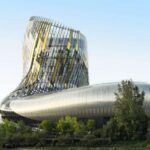
Wine is a major reason people visit Bordeaux, and this route includes the City of Wine (the museum stop) with a detailed list of what makes it worth a visit: the building’s architecture, temporary exhibitions, rooftop, green gardens, and the cultural program.
Even if you don’t have time to stay for a full session today, seeing this stop on the way helps you understand the City of Wine as more than a place to learn about grapes. It’s also a designed public experience—views, gardens, and exhibits in one spot.
Practical tip: if you’re planning to go back later, decide early what you want most. If it’s learning, prioritize exhibits. If it’s atmosphere, prioritize rooftop and gardens. This way, you don’t spend your next visit trying to do everything at once.
Bridges and the highest lift bridge in Europe: the city still surprises
To close out the big UNESCO-style loop, you’ll go to another defining transport moment: the route notes the highest lift bridge in Europe located in Bordeaux.
This stop is a good reminder that Bordeaux’s identity isn’t stuck in the 1700s. Infrastructure still matters. A lift bridge suggests engineering confidence and a working relationship with river traffic, not just scenery.
If you care about photos, this is often a great moment for sharp lines and structure shots. Try to get at least one angle that shows both the bridge structure and the river environment.
Price and value for a private group up to 3
At $201.35 per group (up to 3 people), you’re paying for two things: privacy and a vehicle that is part of the experience. For a city like Bordeaux—where key sites are spread out—this can be better value than you’d think, especially if you want your day to feel guided rather than driven.
The tour also runs about 1 hour 15 minutes, which is ideal if you’re visiting for a short stay or want a first-day orientation. You’ll likely be able to walk more confidently afterward because you’ve seen the main relationships: river to facades, gates to old routes, theater to city identity.
My honest take: it’s a solid value if you like structured sightseeing and you’ll actually use the guide’s context. If you prefer to wander at your own pace with zero interruptions, you might find it feels “fast.” But if you want speed plus meaning, this 2CV format is a fun match.
Should you book the Bordeaux UNESCO 2CV private tour?
I’d book it if you want a fun, efficient introduction to Bordeaux’s UNESCO highlights, especially if you like history that’s explained in plain language while you move through the city. The chance to ride in a classic 2CV, combined with Cecilia’s guiding style and the strong stop list (Girondins, theater, Water Mirror, gate, cathedral bell tower, Rohan Palace, Aquitaine Museum, City of Wine, and the lift bridge), makes it a “see a lot without getting tired” option.
Skip it if you’re mainly looking for deep time in museums or long stays at each landmark. This tour is built for views, orientation, and quick storytelling, not slow, inside-only exploration.
If you’re there for a short trip or you want to get your bearings on Bordeaux fast, this is a memorable way to do it.
FAQ
How long is the Bordeaux UNESCO private tour in the 2CV?
It runs about 1 hour 15 minutes.
What is the price for this tour?
The price is $201.35 per group, up to 3 people.
Is this tour private?
Yes. It’s a private tour/activity with only your group participating.
What language is the tour offered in?
The tour is offered in English.
Where do we meet for the tour?
The start is at 12 Cr du 30 Juillet, 33000 Bordeaux. The guide waits in front of the Tourist Office.
Is pickup included?
Pickup is offered, with the guide waiting at the Tourist Office as noted.
Do I need a mobile ticket?
Yes, a mobile ticket is provided.
Are service animals allowed?
Yes, service animals are allowed.
Can I cancel for a full refund?
Free cancellation is available. You can cancel up to 24 hours in advance for a full refund.
Are there any rules about alcohol?
Only people over the age of 18 can consume alcoholic beverages.