REVIEW · BORDEAUX
Traditional Gourmet Food & Wine Tour in Bordeaux
Book on Viator →Operated by The Bordeaux Foodie · Bookable on Viator
Bordeaux gets more interesting when you eat while you walk. This 3.5-hour food and wine tour mixes classic landmarks with serious tastings, from the famous cannelés to honey, chocolate, and a final wine-cellar finish. You get history, too, but it stays practical and tied to what’s on your plate.
Two things I really like: the stops are thoughtfully packed (breads, pastries, cheese, charcuterie, sweets, and wine), and the pacing stays friendly for a small group. The guide, Alexandra, also works with your tastes and asks questions along the way, so the shopping and tasting feel personal.
One thing to consider: this is a walking-style tasting tour. If you prefer long sit-down meals or don’t like sweets (cannelés, honey, chocolate), you may feel the tour is candy-forward.
In This Review
- Key things I’d plan around
- Why this Bordeaux walk feels worth the money
- Place Pey-Berland: where cannelés meet cathedral legends
- Saint-André Cathedral: short stop, big pilgrimage thread
- Hotel de Ville: the city’s power center, on foot
- Rue des Remparts: medieval street, modern food shopping
- Porte Dijeaux: Roman-era clues and city-border myths
- La Galerie des Grands Hommes: market roots to golden triangle
- Place de la Comédie: opera views and chocolate tasting
- The garden pause: calm time before the wine cellar
- The final wine cellar in Chartrons: your tastings become a meal
- Who this tour is best for
- Quick planning tips so you enjoy it more
- Should you book this Bordeaux traditional gourmet food and wine tour?
- FAQ
- How long is the Traditional Gourmet Food & Wine Tour in Bordeaux?
- Where does the tour start?
- Where does the tour end?
- What language is the tour offered in?
- What tastings and foods are included?
- How large is the group?
- Do I get a mobile ticket?
- Is the tour affected by weather?
- Are service animals allowed?
- How soon will I receive confirmation?
Key things I’d plan around
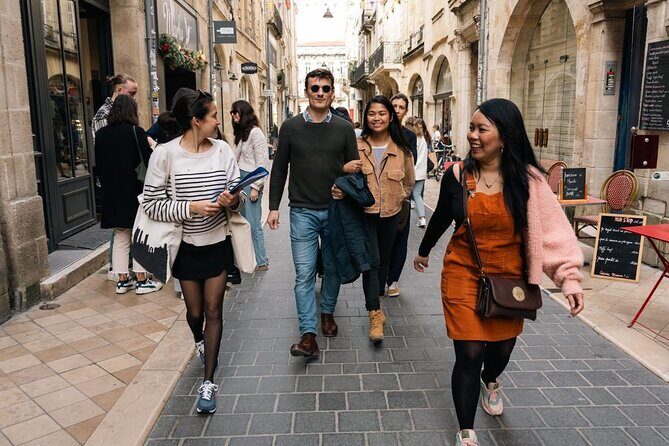
- Small group (max 8) means more conversation and less time waiting.
- Tastings in multiple categories: bread/pastry, cannelés, honey, charcuterie/cheese, chocolates, and regional wines.
- Landmarks tied to food stops, so history doesn’t feel like a lecture.
- Final wine-cellar stop in Chartrons for a more atmospheric ending.
- Alexandra’s focus on preferences, including accommodating requests like gluten-free options.
Why this Bordeaux walk feels worth the money
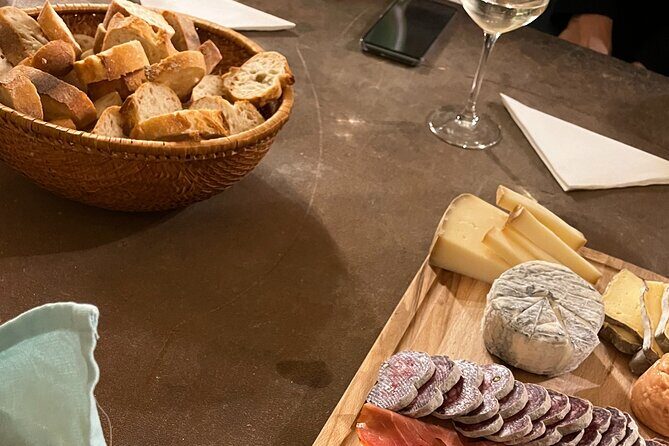
At $123.09 per person for about 3 hours 30 minutes, you’re not paying just for “a tour.” You’re paying for a guided sequence of tastings that would be time-consuming (and hard to line up) on your own. The included items cover the classic Bordeaux snack arc: bread and pastry, then local specialties (cannelés), then the sweet rounds (honey and chocolates), and finally savory with cheese and charcuterie plus regional wine.
Value also comes from how the tour is structured. You’re walking through central Bordeaux while tastings happen at the right moments, instead of squeezing food into gaps between sights. With a group capped at 8, Alexandra can keep the pace human and still ask questions like what you like, what you want more (or less) of, and what you’re curious about.
The other quiet advantage is that the tour helps you shop. You taste first, then you see where those flavors come from—bakeries, wine shops, chocolatiers, and specialty stores. That means when you leave, you’re not just stuffed. You’ve also got a short list for what to buy later.
Other Bordeaux food tours in Bordeaux

Place Pey-Berland: where cannelés meet cathedral legends
You start in Place Pey-Berland, right in the heart of Bordeaux. This square is a great opener because it’s lively and easy to orient yourself—big architecture, open space, and that feeling that you’re already in the center of things.
Alexandra connects the Pey Berland Tower area to Bordeaux’s stories, including references to Saint-André Cathedral and notable weddings that took place nearby. You’re not just looking at stones—you’re learning why this spot matters.
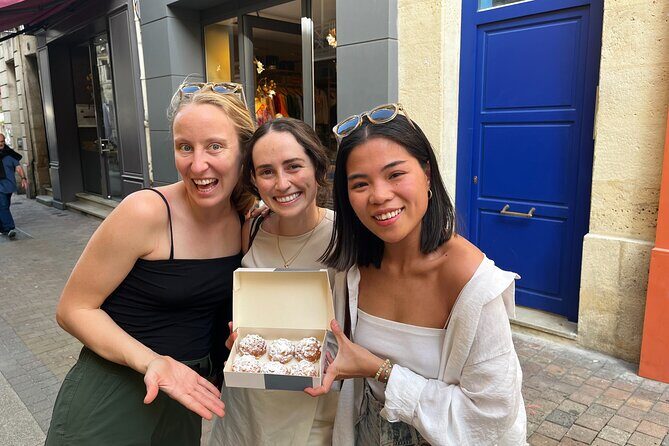
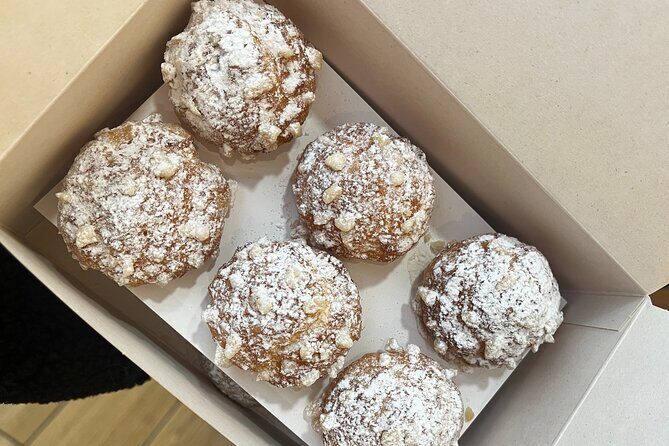
Then comes the first real reward: you stop close by to try what the tour positions as the best cannelés in town. Cannelés are one of those desserts that only make sense once you smell and taste them: caramelized edges, a soft interior, and that signature vanilla-and-rum vibe. Starting the tour with cannelés also sets the tone—this isn’t “a history walk with one snack.” It’s a tasting tour that happens to pass by history.
Practical tip: if you’re coffee-sensitive, note that cannelés are already very aromatic. You’ll likely want water ready and you’ll appreciate a slow first bite rather than rushing.
Saint-André Cathedral: short stop, big pilgrimage thread
Right after the square, you’ll be near Cathedrale Saint-André Bordeaux. This is a quick moment—just enough time to see the building and absorb why it’s on the city’s important list.
Alexandra explains that the cathedral connects to the Camino de Santiago pilgrimage route. That matters because it reframes the cathedral from “just a pretty church” to part of a long European network of travelers and faith. And yes, it’s also tied to Bordeaux’s famous wedding stories, so the tour keeps returning to themes of place and tradition.
Because the stop is brief, it works well even if you’re not a big architecture person. You get the “why it matters,” then you move on to the next tastings.
Consideration: if you like deep museum-style time, you won’t get that here. The tradeoff is the payoff—more tasting stops in exchange for shorter sight stops.
Hotel de Ville: the city’s power center, on foot
Next you reach the Hotel de Ville de Bordeaux area, with a quick look at a building whose timeline runs from 1771 to 1784. The key point for you on this tour: it wasn’t always just an administrative office. It originally served as the Archbishop’s Palace of Bordeaux, and today it’s still the city’s administrative hub.
Alexandra uses this stop to connect how cities change. You see a building designed for religious leadership, then repurposed for civic life. That’s a theme that fits Bordeaux: the city’s identity keeps evolving, but it keeps using the same strong locations.
This is also a “breather” stop. It’s short, you’re not stuck standing forever, and it keeps the walking rhythm steady.
Rue des Remparts: medieval street, modern food shopping
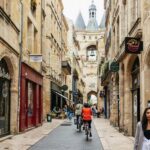
Rue des Remparts is one of those streets you’ll want to linger on after the tour—charming buildings, historic vibe, and small food and artisanal shops that feel like they belong to locals, not tour buses.
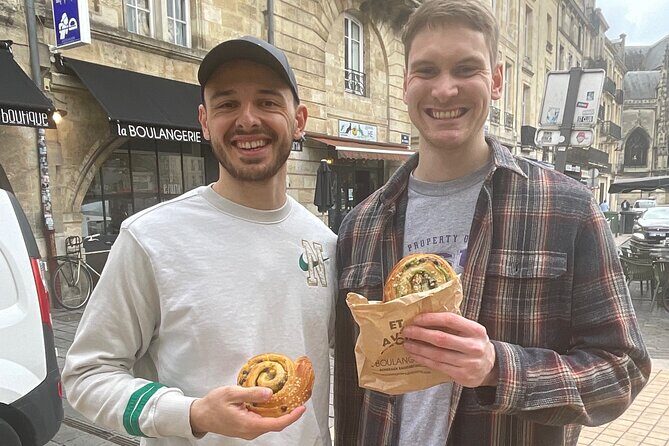
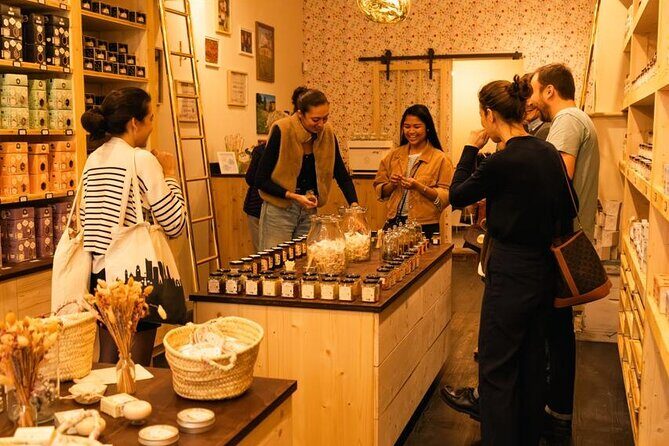
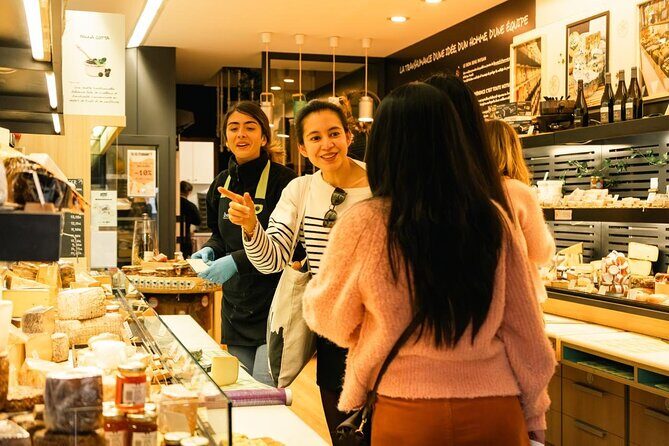
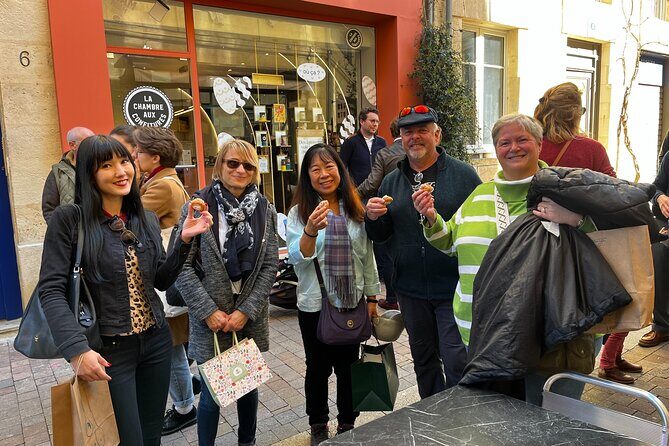
Here’s where the tour leans hard into the “eat-your-way” part. You’ll stop by multiple places to try bread and pastries, plus a honey tasting, and you’ll also buy or taste charcuterie (as well as cheese, depending on what you pick up along the route).
What I like about this stop is that it covers a lot of flavors in a controlled way. Bread and pastry give you texture, honey adds a sweetness with character (not just sugar), and charcuterie brings the savory contrast so you don’t end up with only desserts.
If you’re planning your own day after this tour, Rue des Remparts is the kind of street where you can repeat the best ideas you tasted. The tour helps you learn what to look for: what kinds of bread matter, how honey vendors present their products, and how charcuterie shops package their best cuts.
Other food & drink experiences in Bordeaux
Porte Dijeaux: Roman-era clues and city-border myths
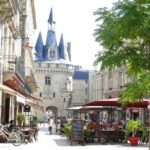
Next you reach Porte Dijeaux, an arched gate tied to ancient entry points into Bordeaux. This is short, but it’s memorable because Alexandra gives you the layered stories that often surround historic monuments.
The tour points to evidence that the site may connect to Roman-era worship, including a temple honoring Jupiter. You’ll also hear another version of the site’s purpose: that it marked a barrier between Bordeaux’s historic city and the Jewish district. Even if you don’t know which story is the final answer, that mix tells you something important: places like this gather meaning over time.
For me, this stop is valuable because it trains your eye. After you’ve seen the gate, you start spotting how Bordeaux organizes space—walls, entrances, boundaries, and later repurposings.
La Galerie des Grands Hommes: market roots to golden triangle
Then the tour moves into the area known as La Galerie des Grands Hommes, sitting in the city’s “golden triangle.” Alexandra frames the setting as a place where refined architecture, high-end shopping, cultural venues, and some of Bordeaux’s top dining establishments all overlap.
One detail I appreciated: this district wasn’t always the elegant shopping zone you picture today. In the 18th century, it served as the bustling old market of the city, and over time it evolved into what you see now—still central, but styled for modern life.
Even though the stop is only about 15 minutes, it works. You get a sense of how Bordeaux’s food culture grew in the places where people gathered to buy and sell. Then you connect that to the tastings you’ve already had, so it feels like you’re watching a city’s food economy develop in real time.
Place de la Comédie: opera views and chocolate tasting
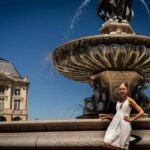
Place de la Comédie is one of Bordeaux’s grand squares, and the tour uses it well. This is where the city opens up visually: views from different angles, major landmarks facing each other, and avenues that pull your eyes outward.
Alexandra points out the Grand Théâtre (the opera) and the Grand Hôtel de Bordeaux facing it, both home to two Michelin star restaurants. Close by, you can also see the direction of other major sights like Monument aux Girondins at Place des Quinconces.
Then you get the pay-off that makes this stop feel like it belongs to a food tour: near the opera, you try different varieties of chocolates from one of Bordeaux’s oldest chocolate institutions.
This is a smart move for your palate. You’ve already tasted cannelés. Now you taste chocolate—different texture, different intensity, and often different flavor styles. Alexandra’s tastings help you notice what’s quality-driven versus what’s just sweet.
If you’re the type who forgets you’re on a tour and just wants to keep looking around, Place de la Comédie is the place it happens. It’s hard not to slow down here.
The garden pause: calm time before the wine cellar
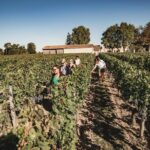
Bordeaux has a knack for offering quiet contrast to busy streets, and this tour includes an oasis moment: a public garden of about 11 hectares, often described as the lungs of Bordeaux. It’s an easy, restful interlude where you can reset—especially helpful after multiple food stops.
Even if you’re not a “park person,” this break matters on a walking tasting tour. It keeps you from feeling like you’re sprinting between flavors. You’ll be happier for the next stage if you take 5–10 minutes to slow your breathing and let your body catch up.
Practical tip: bring a little water and go easy during the garden pause. It’s tempting to snack more after tasting, but your final stop is wine-focused, and you’ll enjoy it more with a calm stomach.
The final wine cellar in Chartrons: your tastings become a meal
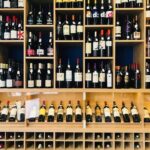
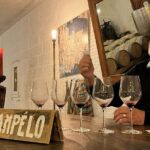
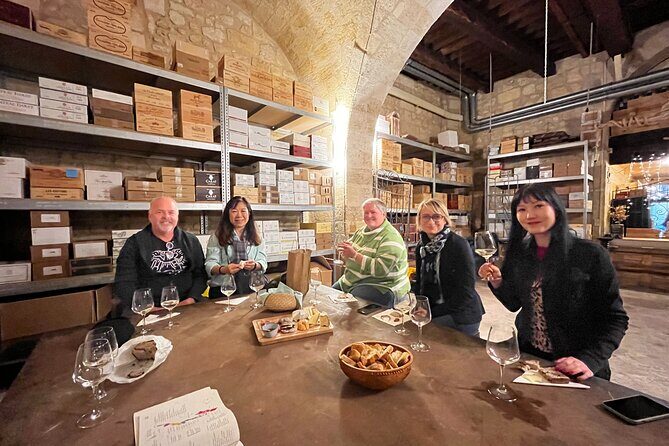
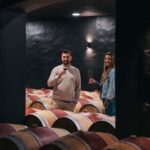
The tour ends in a cozy wine cellar at the beginning of Rue Notre Dame in the Chartrons district. This is where the experience clicks for a lot of people: you stop walking, you settle in, and your tastings connect into something more like a midday meal.
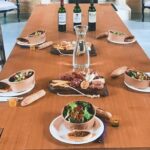
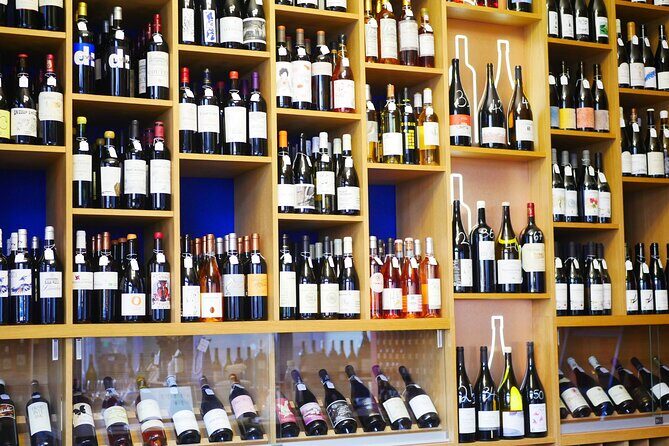
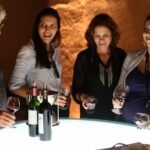
Here you’ll enjoy regional wines alongside the tour’s included local cheese and charcuterie plus the earlier tastings you’ve been collecting throughout the walk. This format is great because it gives structure to what you’ve sampled. Instead of eating random bites in motion, you get a final setting that feels like Bordeaux—warm cellar, wine, and familiar food pairings.
It’s also a nice moment to ask Alexandra for what to do next. The best food tours don’t end when the last bite happens; they leave you with a short list of where to return.
Who this tour is best for
This is a strong fit if you want:
- A small-group Bordeaux experience with real food stops
- A guide who connects landmarks to local food culture
- A mix of savory and sweet tastings, including cannelés, honey, chocolates, cheese, and charcuterie
- Help choosing what to buy after the tour, based on what you actually like
It may be less ideal if you:
- Want long time in museums or churches
- Strongly dislike sweets (cannelés and chocolates are major parts of the flow)
- Prefer to avoid cellar settings or wine-centric endings
Quick planning tips so you enjoy it more
- Wear comfortable shoes. You’re walking through central Bordeaux for about 3.5 hours.
- Go in hungry-ish, not starving. You’ll get multiple tastings, so pacing matters.
- If you have dietary needs, tell Alexandra. The experience has shown it can handle requests like gluten-free options.
- Because it depends on good weather, plan a bit of flexibility. If conditions are poor, you’ll be offered a different date or a full refund.
Should you book this Bordeaux traditional gourmet food and wine tour?
Yes—if you like food, like walking in a historic center, and want a guided tasting route that feels curated without being stiff. The biggest reason I’d recommend booking is the way this tour mixes Bordeaux landmarks with food in a way that teaches you what to taste and why it belongs to this city. With a small group and a guide like Alexandra, you also get personal attention that makes the tastings feel tailored rather than generic.
If your idea of a great trip is mostly big sights with minimal eating stops, or you don’t enjoy sweet bites, you might feel less satisfied. But for a first-time Bordeaux visit—or for anyone who just wants a very good food day—this is one of the more efficient ways to get the city’s flavors and stories in one go.
FAQ
How long is the Traditional Gourmet Food & Wine Tour in Bordeaux?
It lasts about 3 hours 30 minutes.
Where does the tour start?
The tour starts at Place Pey Berland, Pl. Pey Berland, 33000 Bordeaux, France.
Where does the tour end?
It ends at 3 Rue Notre Dame, 33000 Bordeaux, France, in a cozy wine cellar at the beginning of Rue Notre Dame in the Chartrons district.
What language is the tour offered in?
The tour is offered in English.
What tastings and foods are included?
The tour includes freshly baked breads, regional wines, the best cannelés in Bordeaux, gourmet chocolate tastings, honey tastings, local cheese and charcuterie, and famous local pastries.
How large is the group?
The tour has a maximum of 8 travelers.
Do I get a mobile ticket?
Yes. The tour includes a mobile ticket.
Is the tour affected by weather?
Yes. It requires good weather. If it’s canceled due to poor weather, you’ll be offered a different date or a full refund.
Are service animals allowed?
Yes, service animals are allowed.
How soon will I receive confirmation?
You should receive confirmation within 48 hours of booking, subject to availability.