REVIEW · BORDEAUX
Bordeaux: Wine History Tour with Tasting
Book on GetYourGuide →Operated by Free Walking tours Bordeaux · Bookable on GetYourGuide
Wine labels can feel like a puzzle. This tour turns that frustration into confidence with a focused walk in Chartrons and a sommelier-led blind tasting at the end.
I really like the way it teaches you how a pro thinks. You practice spotting grape and style clues without relying on the name first, then you build a mental map for Bordeaux wine villages so the region starts to make sense fast.
One thing to plan for: you won’t enter monuments during the walk, and some stops are view-only while the guide explains what mattered there.
In This Review
- Key points to know before you go
- Why Chartrons is the right start for Bordeaux wine people
- What you actually learn before the tasting starts
- Reading a French wine label without panicking
- Why 75 cl bottles matter more than you think
- Remembering Bordeaux wine village names
- The walk: city stops that connect to wine history
- Église Saint-Louis des Chartrons
- CAPC Museum of Contemporary Art
- Pont de Pierre
- Cité du Vin
- Quais de Bordeaux and the Chartrons riverside
- The best part: blind tasting of 4 Bordeaux wines + 3 cheese pairings
- How the sommelier technique helps you
- Why cheese pairing improves the learning
- Price and value: what $76 buys you in Bordeaux terms
- Who this tour fits best (and who might want to skip)
- How to carry the learning into your next wine shop stop
- Should you book this Bordeaux wine history tour?
- FAQ
- FAQ
- How long is the Bordeaux wine history and tasting tour?
- Where does the tour start and end?
- What’s included in the tasting?
- What does the blind tasting include?
- What languages is the tour offered in?
- Is the tour suitable for everyone?
Key points to know before you go
- Blind tasting coaching: you learn how a sommelier decodes wines step by step.
- Bordeaux labels explained in plain terms: you get help with the confusing French system.
- Chartrons history on foot: wine merchants shaped this neighborhood for centuries.
- A smart “walk then taste” format: the city context lands right before the tasting.
- Tasting lineup + pairing: 4 Bordeaux wines (including a sweet) matched with 3 French cheeses.
- Great guide energy: past groups praised clear explanations from guides like Adrián, Caz, and Clemence.
Why Chartrons is the right start for Bordeaux wine people
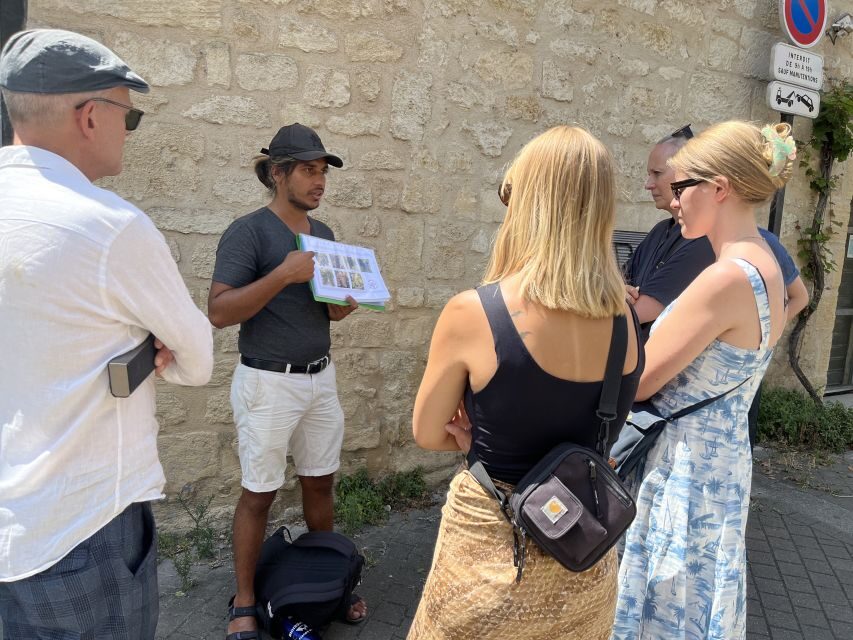
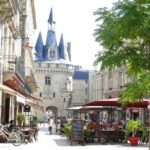
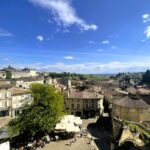
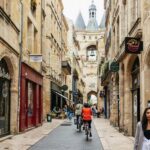
Chartrons is where Bordeaux’s wine story becomes visible in everyday life. The neighborhood dates back about 300 years, when wine merchants arrived and helped shape how the city moved, traded, and built its reputation. It’s also the kind of place where you’re walking near the river, looking out over the city, while your guide connects what you see to why wine mattered here.
If you’re the type who wants context (not just swirly-cheek “notes”), you’ll like this. The tour uses the streets as a shortcut to understanding Bordeaux. Instead of treating wine as something that lives only in cellars or bottles, you get the human side: trade, classification, and why names and labels became important.
I also like that the pacing respects short attention spans. This is a 2-hour experience, with a walking portion and then a tasting. You’re not stuck listening forever before you get to smell and sip.
Other food & drink experiences in Bordeaux
What you actually learn before the tasting starts
This tour isn’t only sightseeing with wine at the end. You get practical wine literacy that you can use the next time you’re in a shop.
Reading a French wine label without panicking
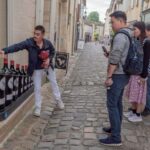
French wine labels can look like code. You’ll learn why it can be difficult to understand what you’re buying, and you’ll get a framework for decoding it. That includes how to think about classification in Bordeaux, which is where a lot of the confusion starts for first-timers.
The guide also explains grape varieties. You’ll be better prepared to ask the right questions, and you’ll notice patterns faster when you’re tasting later.
Why 75 cl bottles matter more than you think
Yes, the bottle size. You’ll learn why wine bottles are 75 cl. It sounds trivial, but it’s one of those facts that makes the whole system feel less random and more standardized.
Remembering Bordeaux wine village names
You’ll also work on memory. The tour includes a way to remember wine village names in Bordeaux. That’s a real advantage if you plan to travel beyond the city or if you want to follow recommendations later without constantly checking your phone.
And the best part is that you’re learning these ideas while you’re still in motion. When your brain links “street history” to “wine logic,” it tends to stick.
Other historical tours in Bordeaux
The walk: city stops that connect to wine history
The tour’s meeting point is 64 Quai des Chartrons, where your guide is easy to spot holding a turquoise umbrella. From there, you start with a short guided sightseeing segment and then settle into a walk that runs for most of the tour.
Here’s how the main stops work, and why they matter.
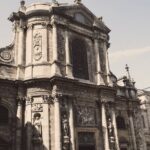
Église Saint-Louis des Chartrons
You’ll make a quick photo stop here and learn its story while you’re walking by. Because you won’t enter monuments, you should think of these stops as context checkpoints. You get the meaning, not the long museum-style visit.
Still, it helps you picture the neighborhood as a lived-in part of Bordeaux, not just a wine-brand backdrop.
CAPC Museum of Contemporary Art
Next is a stop near the CAPC museum. Even if you don’t go inside, the guide uses the location to keep the city story moving. It’s part of how Bordeaux blends old trade routes and modern culture along the river.
This stop is short, so don’t expect a deep art detour. You’re here to connect dots.
Pont de Pierre
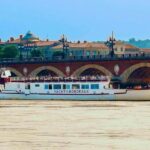
You’ll cross through sightseeing near Pont de Pierre, with views that make the city feel bigger than the wine district alone. The guide uses this kind of viewpoint to explain how Bordeaux functions as a trading port—where moving goods mattered as much as making wine.
If you like photos, this is a good area for them, since you’ll be seeing Bordeaux from a classic angle.
Cité du Vin
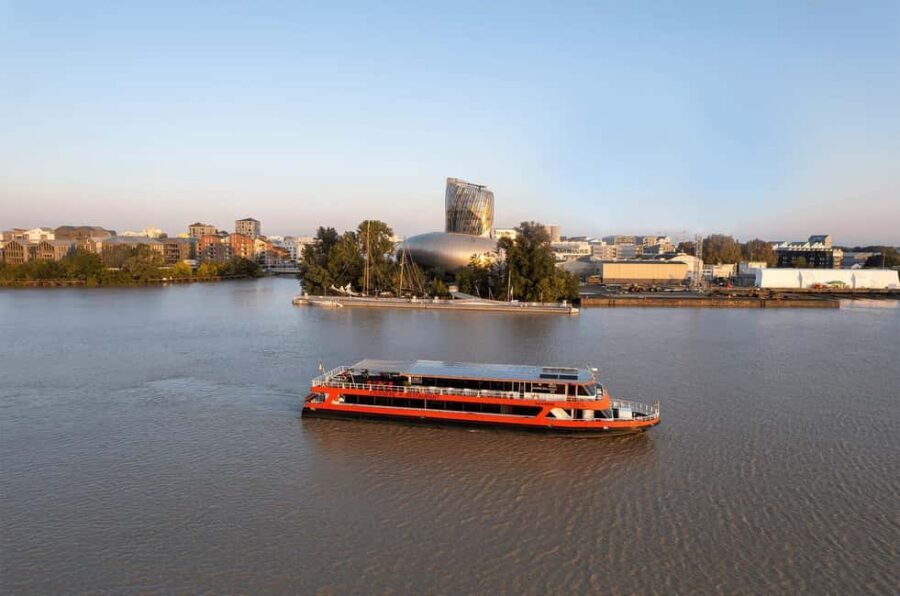
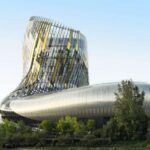
The Cité du Vin is one of those sights that instantly signals Bordeaux means business about wine education. During this tour, you see it as part of the route—again, you won’t enter—while the guide gives you context about why wine culture is treated as a major identity here.
It’s a quick stop, but it helps set up what you’ll do next: blind tasting and label-reading. You go from seeing wine as a brand and a landmark to tasting wine as actual juice in a glass.
Quais de Bordeaux and the Chartrons riverside
The tour spends time around the quays and the riverside, including a photo stop along the way. This is where the walk becomes really pleasant. You get river views, you’re not stuck indoors, and you can slow down for a moment while your guide ties the neighborhood back to the merchant history of the area.
You finish back at 24 Quai des Chartrons, still in the same wine-centered zone.
The best part: blind tasting of 4 Bordeaux wines + 3 cheese pairings
Now for the moment wine people wait for: the tasting.
You’ll do a blind tasting of 4 Bordeaux wines:
- 1 white wine
- 2 red wines
- 1 sweet wine
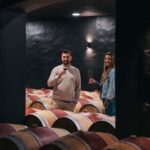
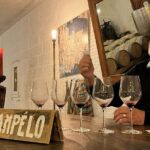
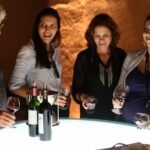
They’re Bordeaux organic wines, and they’re paired with 3 French cheeses. The structure matters. The tasting isn’t random sipping. You taste, you compare, and you learn how to describe what’s in the glass without relying on branding.
How the sommelier technique helps you
The guide teaches you how a sommelier decodes wine in a blind tasting. That means you practice interpreting clues from appearance, smell, and flavor—then you connect those clues back to grape variety and style.
This is also where the label lesson pays off. After your blind tasting, the idea of a French wine label becomes less mysterious. You start to see labels as something you can cross-check, not something you have to obey.
Why cheese pairing improves the learning
Cheese isn’t just there for fun. It changes how you experience the wine—salt, fat, and texture can make flavors pop or soften. Pairing three cheeses with four wines gives you a clear sense of how Bordeaux wines behave with food, which is exactly how you’ll drink them when you’re actually eating in France.
And from the strongest reviews, this pairing setup is one of the top reasons people recommend the tour. The tasting is described as excellent, and the matching with cheese is repeatedly called out as a highlight.
Price and value: what $76 buys you in Bordeaux terms
At $76 per person for a 2-hour tour, you’re paying for two things that cost real money in wine country: instruction and guided tasting.
What you get that helps justify the price:
- A walking format that covers key Bordeaux wine-history areas in about an hour
- A wine expert or sommelier to run the blind tasting
- 4 glasses of wine included (organic Bordeaux)
- 3 cheese pairings included
- Practical teaching: grape variety basics, label decoding, and wine classification context
Compared to doing the tasting on your own, the value is the coaching. Blind tasting with someone who can explain your guesses turns it from drinking into learning.
Compared to booking a long, expensive tour that may feel rushed, this one keeps the time tight and the payoff clear. Two hours is enough to learn a framework and taste a range without burning your day.
Who this tour fits best (and who might want to skip)
This experience is best for you if:
- you want an easy entry into Bordeaux wine without needing prior knowledge
- you’re curious about why labels are confusing and want a simple method
- you like city walks paired with food-and-wine tasting
- you want a guided blind tasting, not just a menu of pours
From the info provided, it’s not suitable for pregnant women and it’s not for children under 18. If either applies, you’ll want to choose another option.
Also, if monuments you can enter are a must, keep expectations realistic. This tour doesn’t include entering monuments, and some views are distant while the guide explains.
How to carry the learning into your next wine shop stop
When the tasting ends, you’ll likely want to test what you learned right away.
Here are a few things you can do immediately:
- Look at wine labels and identify the components you were taught to decode. Even if you don’t remember everything, you’ll recognize the structure.
- Use the village-name memory trick when you see Bordeaux appellation names.
- Think in grape variety and classification terms first, not just brand or price.
- When you taste at restaurants later, pay attention to how wine changes with salt and fat—especially if you order cheese.
If you’re traveling with friends who don’t know wine, this tour also works as a translator. You’ll have a simple explanation for what you’re seeing and tasting, and you won’t sound like you memorized a brochure.
Should you book this Bordeaux wine history tour?
I’d book it if you want Bordeaux wine to feel understandable fast. The blind tasting plus the label decoding is the core value, and the Chartrons walk gives you real place-based context instead of turning wine into a classroom lecture.
Skip it if you mainly want monument interiors or a long, museum-style experience. This one is built for short stops, good views, and a hands-on tasting.
FAQ
FAQ
How long is the Bordeaux wine history and tasting tour?
It lasts 2 hours.
Where does the tour start and end?
You start at 64 Quai des Chartrons and finish at 24 Quai des Chartrons.
What’s included in the tasting?
You’ll taste 4 Bordeaux wines (1 white, 2 reds, 1 sweet) and you’ll have 3 French cheese pairings.
What does the blind tasting include?
You’ll do a blind tasting of the Bordeaux wines, with a wine expert or sommelier teaching you how to decode what you’re tasting.
What languages is the tour offered in?
The live guide speaks English and Spanish.
Is the tour suitable for everyone?
No. It’s not suitable for pregnant women and children under 18. The walk also does not include entering monuments, with some sites seen from a distance.